Valuing Distressed Property Value: A Complete Guide
Valuing Distressed Property Value: A Complete Guide
Distressed property valuation relies on foreclosure auction results, REO sales, and tax sale data rather than standard MLS comps, with adjustments for deferred maintenance, repair costs, and investor discount. WeBuyNOVA applies this as-is approach for Sterling and Northern Virginia homeowners, delivering fair cash offers within 24 hours, without repairs, commissions, or fees.
Key Takeaways
- Distressed property comps require data from foreclosure auctions, REO sales, and tax sale transactions for accuracy.
- Private lenders apply precise adjustments for deferred maintenance, repair costs, and investor discounts to valuations.
- A few percentage points in valuation difference determines whether properties refinance or face foreclosure outcomes.
- Strategic real estate valuation in distress situations shapes negotiations, court rulings, and asset control decisions.
What Will You Need Before You Start?
Preparation determines whether a distressed property sale moves smoothly or stalls in confusion. Sterling and Northern Virginia homeowners dealing with deferred maintenance, storm damage, or an inherited estate need specific documentation and a clear head before any offer conversation begins. Skipping this step often leads to mismatched expectations between what an owner hopes a home is worth and what its actual condition supports.
Distressed property value depends heavily on documented condition, not memory or assumption. A traditional home comparison pulled from nearby sales won't reflect a property needing major repairs, so owners should gather condition-specific records instead. This is the foundation of an accurate distressed home appraisal.
What documents should a homeowner gather first?
Start with anything that proves the property's current condition and history. A short checklist covers most cases:
- Recent photos of damaged areas, room by room
- Repair estimates or contractor notes, if available
- Insurance claims or inspection reports tied to the damage
- Any prior appraisal or tax assessment records
- A list of known issues: roof age, HVAC condition, foundation concerns
These records give a clearer picture of how to value damaged home properties honestly, without guesswork clouding the numbers.
Is the property worth keeping, repairing, or selling as-is?
That question deserves an honest answer before pricing conversations start. Owners weighing repairs against a sale should compare renovation costs to expected returns. A property can look like an opportunity while functioning as a financial burden instead. Clarity here supports a realistic valuation for as-is sale and prevents costly surprises later.
How Do You Estimate Your Distressed Property Value?
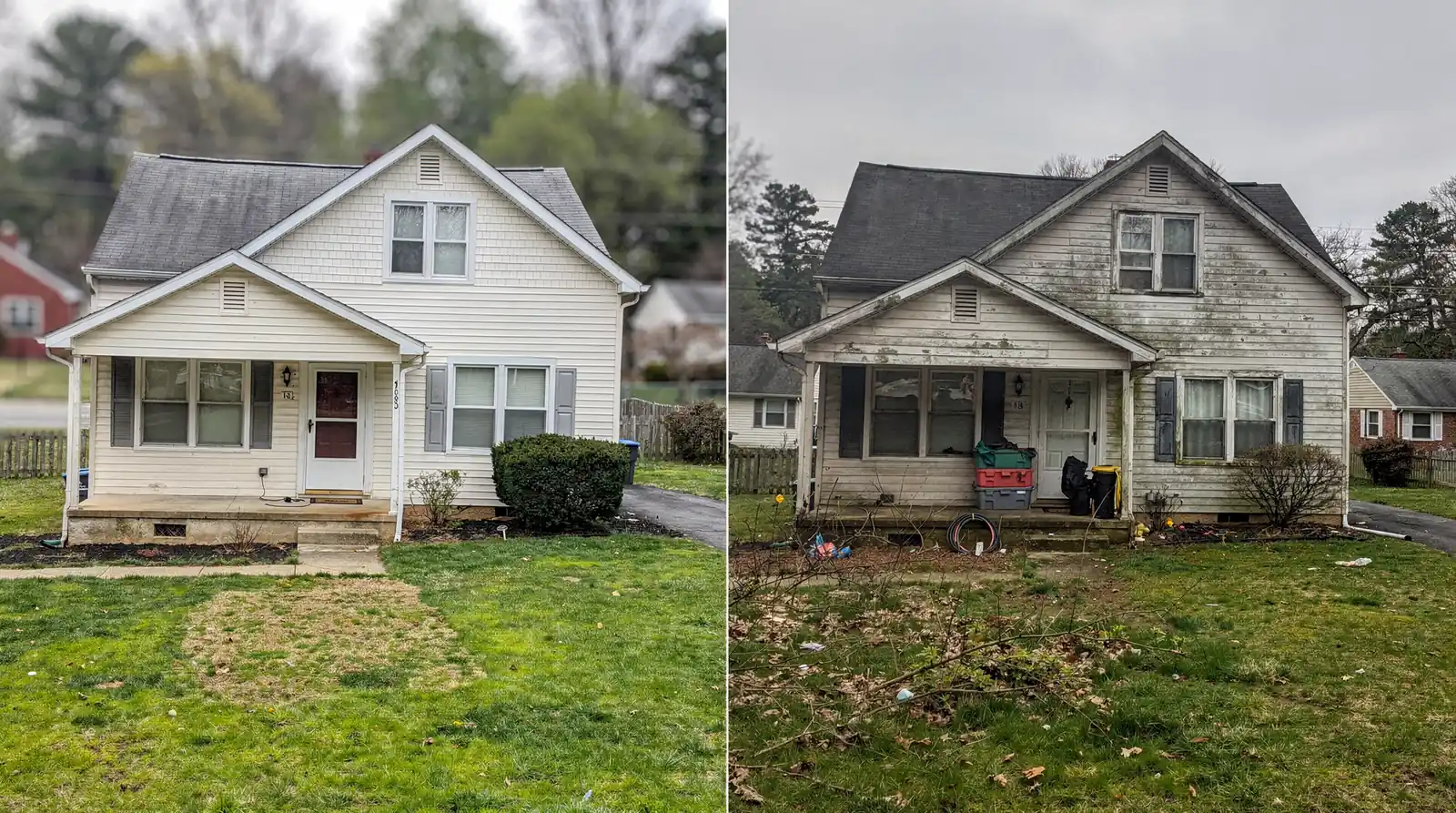
Homeowners estimate a damaged home's worth by starting with adjusted comparisons, not standard listing prices. A property with a failing roof, outdated systems, or fire damage cannot be measured against move-in-ready homes down the street. Getting this right requires a different method entirely, one built specifically for distressed property value.
Why don't regular home comps work for a damaged property?
Standard market comparisons pull from well-maintained, actively marketed homes that just sold nearby. Those sales reflect properties with new paint, working HVAC systems, and no structural issues. None of the complications that define a distressed home. Relying on those numbers alone overstates what a damaged property will actually fetch. Can lead an owner to expect a price the market won't support.
Valuation for as-is sale requires a more precise process. Here's how homeowners approach it:
- Gather comparison data specific to distressed sales, not typical MLS listings.
- Identify every area of deferred maintenance — roof age, foundation cracks, plumbing, electrical.
- Get a realistic estimate of repair costs for each identified issue.
- Subtract an investor discount, since buyers taking on repair risk price accordingly.
- Arrive at a final as-is figure that reflects true condition, not hoped-for condition.
How do you know how to value a damaged home without a full inspection?
A distressed home appraisal doesn't always require a formal inspection before getting an initial number. Cash buyers routinely evaluate properties in any condition, which removes the burden of estimating repair costs upfront. Inherited homes work the same way. Sellers avoid paying for repairs or staging just to get a fair, informed offer on the property as it stands today.
How Do You Calculate Repair Costs and As-Is Value?
Calculating repair costs starts with a room-by-room inspection, followed by subtracting those estimated costs from the home's current market value. The result is the distressed property value. The number that reflects what a home is actually worth in its present condition, not what it could be worth after renovations. For homeowners facing deferred maintenance or an inherited estate full of unknowns, this figure matters more than any online estimate.
Understanding how to value a damaged home requires a different process than a standard appraisal. Follow these steps:
- Identify every major repair need — roof, foundation, plumbing, electrical, HVAC.
- Estimate the cost to fix each issue at current contractor rates.
- Compare the property against similar as-is sales, not fully renovated listings.
- Subtract total repair costs from the adjusted market value to reach a defensible figure.
This math forms the backbone of valuation for as-is sale decisions. Real estate valuation in distressed situations is a strategic tool. It shapes negotiations and can determine who ultimately keeps or loses a property. That's why an accurate, honest number carries weight far beyond a simple price tag.
Why Does a Damaged Home Appraise Lower Than Market Value?
A distressed home appraisal accounts for repair costs, carrying expenses, and the reduced pool of buyers willing to take on a fixer-upper. Traditional buyers typically avoid homes needing major work, which narrows demand and pulls the appraised figure downward.
Does Selling As-Is Mean Accepting a Lower Offer?
Not necessarily. A cash sale eliminates realtor commissions and hidden fees, so the full offer amount stays transparent from the start. As a Sterling, VA-based buyer, WeBuyNOVA weighs local market conditions alongside repair estimates, giving homeowners a clearer, faster path to an accurate as-is figure than the traditional listing process typically allows.
How Does a Distressed Home Appraisal Differ From Cash Offers?
A formal appraisal estimates market value on paper. A cash offer delivers a real number a homeowner can act on within days. That distinction matters most for owners facing pre-foreclosure deadlines, deferred maintenance, or an inherited property that needs to sell before probate costs pile up. Understanding distressed property value starts with recognizing that traditional appraisals and cash valuations answer different questions entirely.
An appraiser calculates what a property might sell for under ideal conditions, assuming repairs get made and the home sits on the market for months. A cash buyer instead determines what the property is worth today, in its current condition, with no repair period and no listing wait. Valuations built this way rest on assumptions about market conditions, future performance, and timing. Those assumptions shift depending on who performs the review and why. This is precisely why two valuations of the same distressed home can land far apart.
How fast can a cash offer replace a traditional appraisal timeline?
Cash buyers typically deliver offers within 24 to 72 hours, compared to weeks for a full appraisal and listing cycle, as part of a fast real estate closing process. Inherited or distressed properties can close in as little as 7 to 14 days once that valuation is accepted, giving heirs and owners a clear exit without carrying costs stacking up.
Valuation for as-is sale purposes weighs different factors than a bank appraisal:
- Current condition and needed repairs, not projected post-repair value
- Local market conditions specific to the property's neighborhood
- Speed of close as part of the offer itself
Operating from Sterling, VA, WeBuyNOVA's team factors Northern Virginia's local conditions directly into every distressed home appraisal and offer, rather than relying on generic regional averages.
What Mistakes Should You Avoid When Valuing a Damaged Home?
Five recurring errors shrink a homeowner's return or slow down a sale entirely. Each one stems from treating a damaged property like a move-in-ready listing instead of what it actually is: a distinct valuation problem with its own rules.
The first mistake is assuming distressed valuation works exactly like a standard appraisal. Distressed property value follows the same foundational logic as a healthy home's value. The process carries more moving parts and more room for error. Skipping steps or rushing the review leads to numbers that don't hold up.
The second mistake is trusting a single automated estimate as the final word. Sound valuation for as-is sale blends data analysis with hands-on judgment from someone who understands repair costs and market timing. An algorithm alone rarely captures both sides of that equation.
Why does incomplete information hurt a valuation?
Submitting incomplete or inaccurate property details before requesting an offer delays the timeline and can lower the resulting number. Full disclosure upfront supports a faster, more accurate response.
Is a standard home sale process the right fit for storm or fire damage?
Not usually. Homeowners with fire- or storm-damaged property often lose value by ignoring specialized sell home fast strategies built for that exact situation.
Common missteps to avoid:
- Treating a distressed home appraisal like a routine market analysis.
- Relying only on automated tools when learning how to value damaged home properties.
- Withholding repair history or damage details from the buyer.
- Ignoring options designed specifically for fire- or storm-damaged homes.
FAQ
What documents should you gather before valuing a distressed property?
Collect recent photos of damaged areas, repair estimates or contractor notes, insurance claims or inspection reports, prior appraisals or tax assessments, and a list of known issues like roof age or foundation concerns.
Standard comps come from well-maintained, actively marketed homes with new paint and working systems, so relying on them overstates a distressed property's actual value.
What data sources give accurate distressed property comps?
Accurate distressed property comps come from foreclosure auction results, REO sales, and tax sale data, adjusted for deferred maintenance, repair costs, and investor discounts.
Conclusion
Understanding distressed property valuation gives homeowners the clarity to make informed decisions about a home's true market value. Recognizing how condition, market timing, and comparable sales shape appraisals turns guesswork into a clear, defensible number. Whether a homeowner is navigating a challenging sale or weighing options, this foundation supports realistic expectations and a strategic path forward.
About The Author
Eunice Johnson is a real estate expert with over a decade of experience in the Sterling, VA housing market. She specializes in helping Northern Virginia homeowners navigate the complexities of selling quickly and efficiently, particularly through cash sales, with a focus on foreclosure and pre-foreclosure situations. As a cash home buyer at WeBuyNOVA, Eunice works directly with motivated sellers across Fairfax, Loudoun, Sterling, and Prince William counties to build realistic plans and move through the local market with clarity. Her practical approach and commitment to clear communication have made her a trusted resource for homeowners looking to sell with confidence.
Learn more About WeBuyNOVA.
Contact Us
Ready to discuss a cash sale for your home in Sterling, VA and surrounding areas? Reach out to WeBuyNOVA directly:
- 📞 Phone: 571-200-2365
- ✉️ Email: [email protected]
- 📅 Consultation: Schedule a time to meet with WeBuyNOVA
- 🌐 Website: webuynova.com