Sell Damaged House: Selling a Damaged House in Northern Virginia
Sell Damaged House: Selling a Damaged House in Northern Virginia
By WeBuyNOVA Editorial Team · Updated 2026-08-29
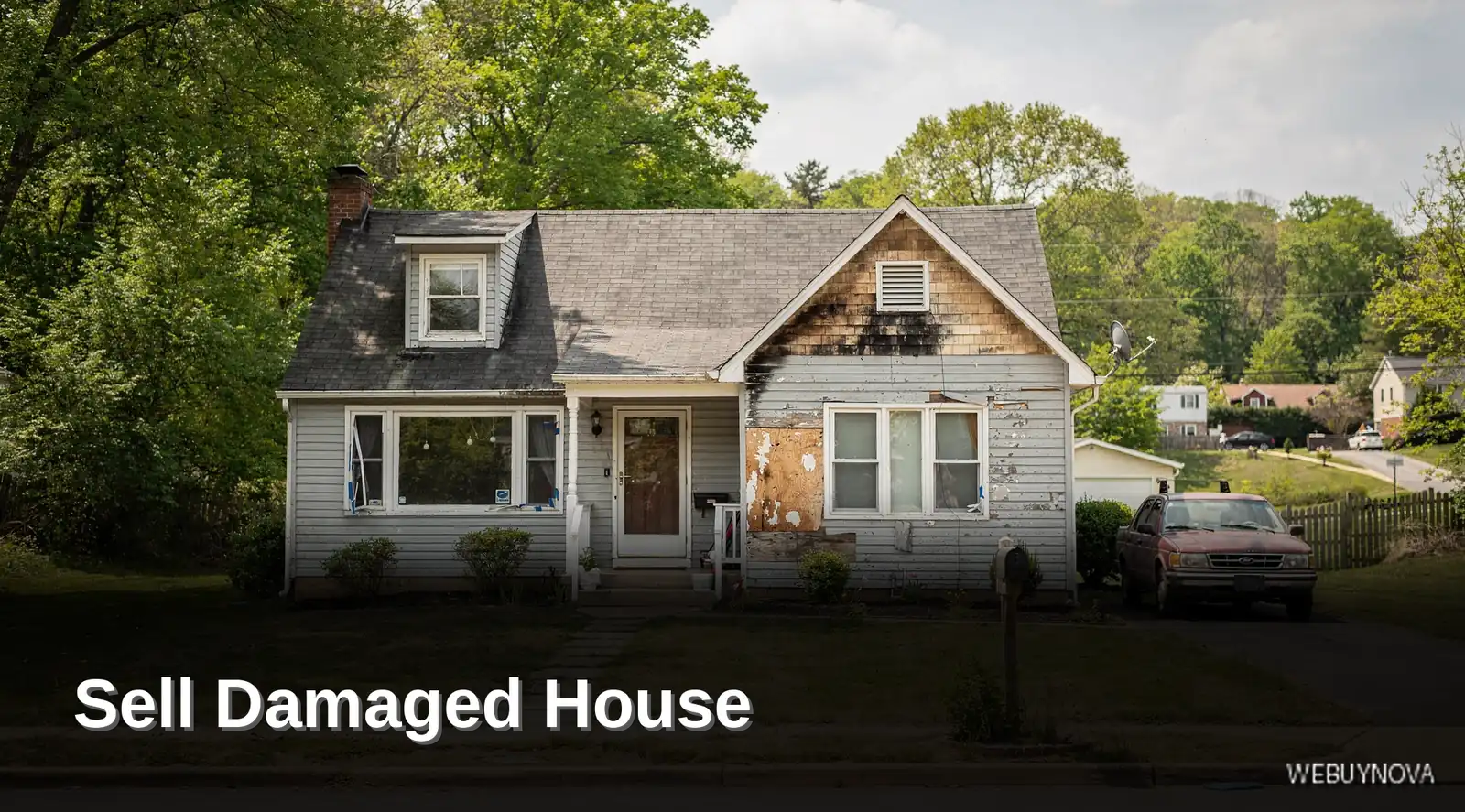
Homeowners across Northern Virginia can sell fire, flood, or storm-damaged property as-is by working with a direct cash buyer like WeBuyNOVA | We Buy Houses For Cash, a Sterling, VA-based company serving the region, skipping repairs, insurance-claim delays, and the months-long uncertainty of a traditional listing.
Homeowners who need to sell fire damaged house northern va, sell flood damaged home sterling va, or sell storm damaged property fast va move quickest through a direct cash sale, bypassing repairs and inspections entirely. WeBuyNOVA purchases damaged properties as-is, extending cash offers without requiring restoration work, realtor commissions, or out-of-pocket expenses, giving homeowners who want to sell house as-is after disaster northern virginia a straightforward path to closing.
Key Takeaways
Buyers exist for fire, flood, and storm damaged homes in Northern Virginia despite significant property damage.
The National Flood Insurance Program, managed by FEMA, operates through over 47 insurance companies nationwide.
Standard homeowners insurance does not cover flood damage; separate flood insurance policies are required for protection.
WeBuyNOVA, a Sterling, VA-based company, purchases damaged houses throughout Northern Virginia for cash without requiring repairs or inspections.
What Should You Know Before Selling Storm-Damaged Property?
Storm damage does not doom a Northern Virginia property to sit unsold. A house scarred by fire, flooding, or a foundation crack after severe weather remains marketable to the right buyer. This holds true whether the property suffered minor cosmetic staining or severe structural failure. The critical decision for homeowners in Fairfax, Loudoun, and Prince William counties is not whether the house can sell, but which path fits the situation.
Homeowners generally face three routes forward:
Sell the damaged house as-is to a cash buyer for speed and certainty
List on the open market with full disclosure of the damage
Complete repairs first, then sell to a traditional buyer
Each path carries tradeoffs in timeline, cost, and buyer pool. Repairs before listing widen the pool of interested buyers but demand upfront capital and months of contractor coordination. Full-disclosure open-market listings avoid renovation costs but often limit offers to investors and cash-ready buyers already comfortable with damage.
Why Do Homeowners Struggle to Sell Fire or Water-Damaged Homes?
Insurance claims, repair estimates, and emotional strain compound quickly after fire or water damage. Homeowners juggle adjuster visits, contractor bids, and mounting stress while still living with the aftermath. Traditional sale timelines add months to that burden, which pushes many toward a faster alternative.
Who Buys Storm-Damaged Homes Without Repairs?
A damaged property buyer purchases homes in their current condition, skipping inspection contingencies tied to repairs. WeBuyNOVA serves homeowners throughout Northern Virginia, evaluating storm-affected properties and extending cash offers without requiring restoration work first. This approach functions as an as-is disaster sale, removing repair costs and delay from the equation entirely.
How Do You Assess Damage And Insurance Coverage First?
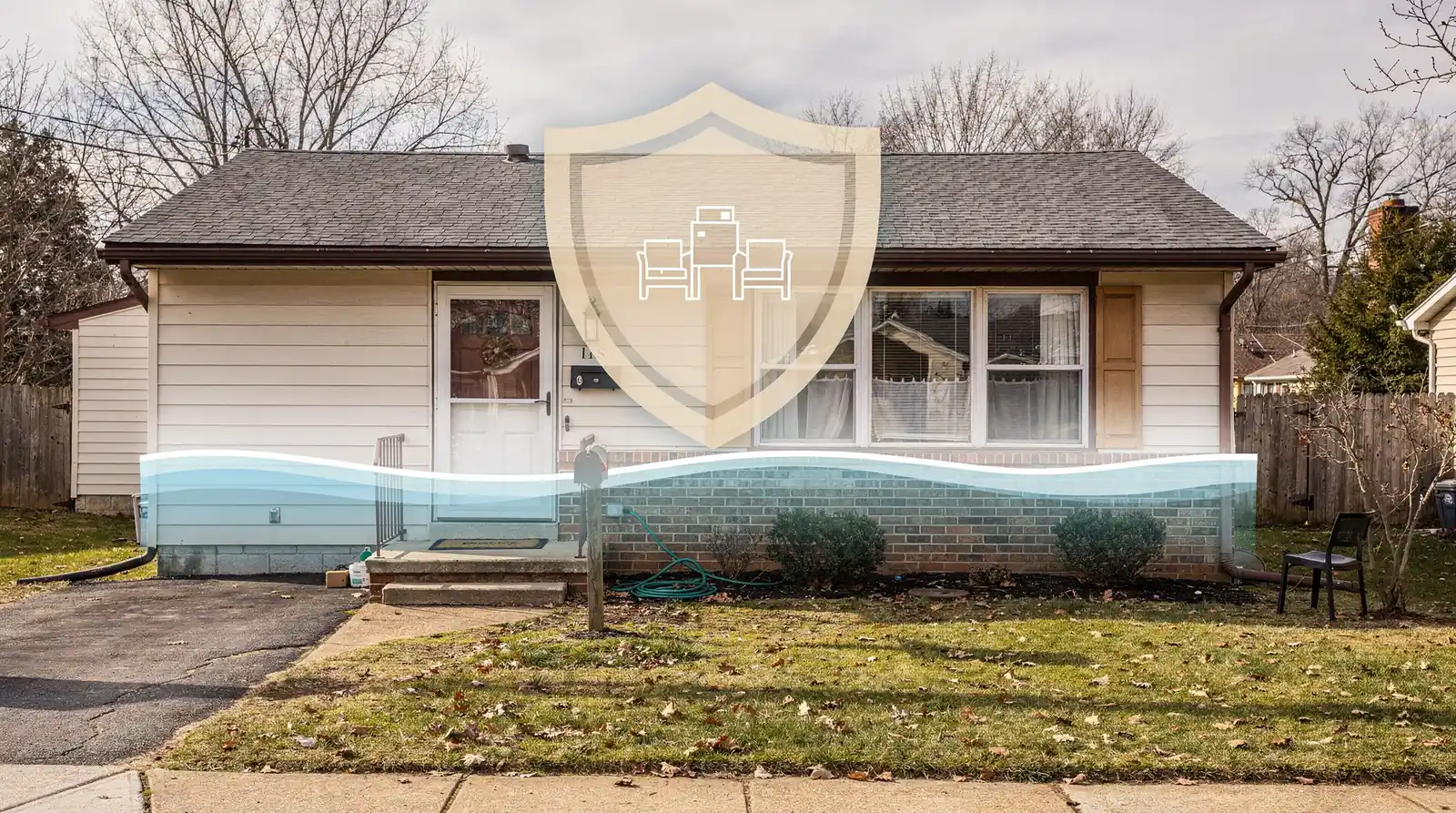
Assessing damage starts with a clear inventory of what happened and a review of what the homeowner's policy actually covers. Northern Virginia properties affected by fire, flooding, burst pipes, roof collapse, or foundation failure often become uninhabitable and expensive to repair before an owner even finishes cataloging the loss. That gap between damage and coverage shapes every decision that follows.
Before deciding whether to restore or pursue an as is disaster sale, homeowners in Loudoun, Fairfax, Prince William, and surrounding counties should complete these steps:
Photograph and document every affected area, room by room, including structural cracks, water lines, and scorch marks.
Pull the current homeowners insurance policy and identify what perils it actually covers.
Contact the insurer to open a claim and request a written damage assessment.
Obtain repair estimates from licensed contractors for comparison against the insurance payout.
Calculate carrying costs, mortgage, taxes, and insurance, for each month the home sits unlivable.
Does homeowners insurance cover flood damage?
Most standard homeowners insurance policies exclude flood damage entirely. Flood coverage requires a separate policy that protects the building structure, its contents, or both. Northern Virginia homeowners near flood-prone waterways should confirm this distinction immediately. Assuming standard coverage applies can delay recovery by weeks.
Why does the insurance process feel overwhelming to many homeowners?
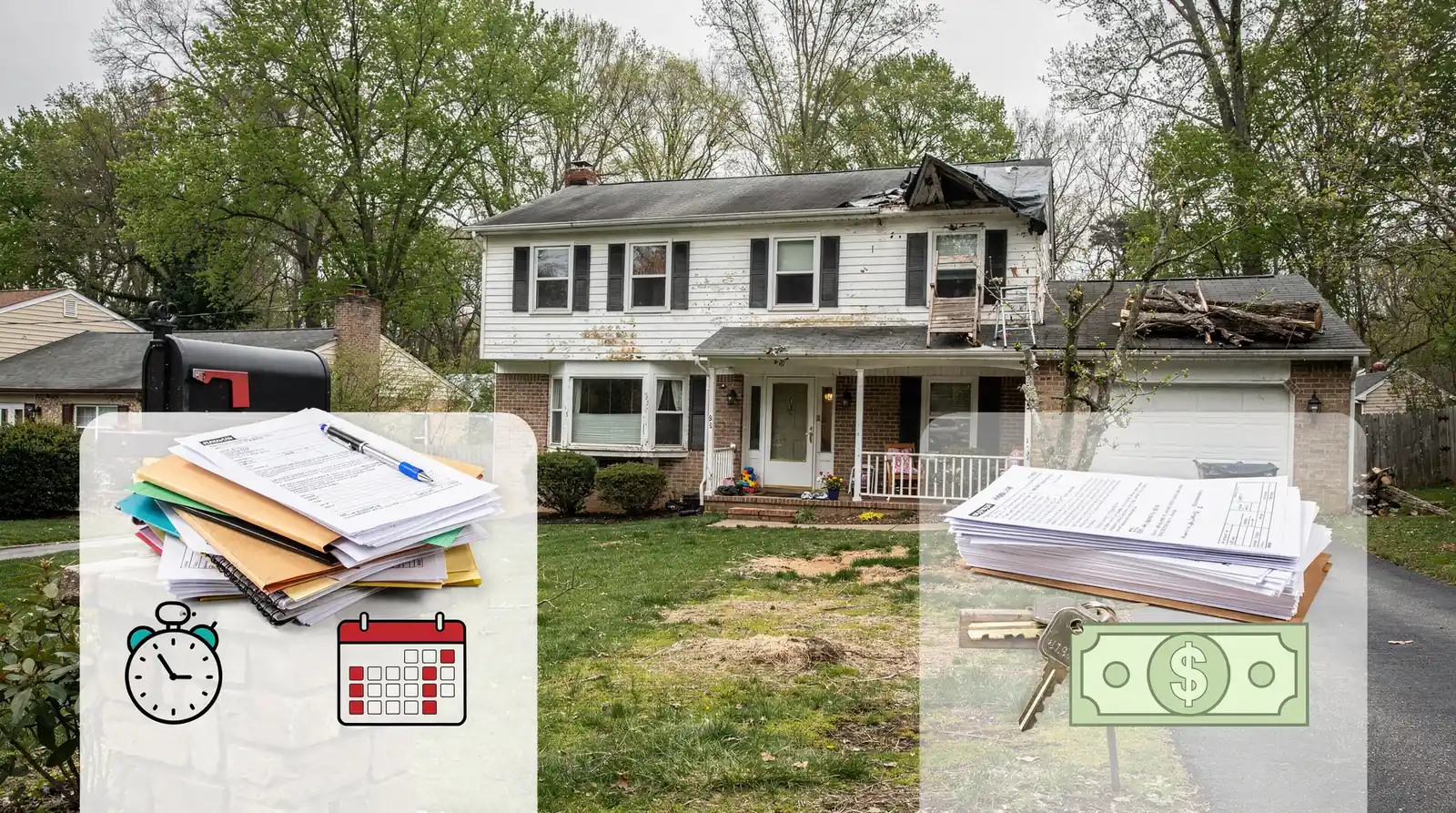
Insurance may cover part of the loss, but managing claims paperwork alongside contractors and months of renovation planning exhausts most owners quickly. Mortgage, tax, and insurance payments continue accruing on a house nobody can occupy. For owners who want to sell damaged house property without waiting on repairs or adjusters, contacting a damaged property buyer like WeBuyNOVA, which purchases fire- and flood-damaged homes throughout Northern Virginia, offers a documented, faster alternative to the traditional claims-and-repair cycle.
Which Sale Option Fits Your Damaged Northern Virginia Home?
Three main paths exist for a fire-, flood-, or storm-damaged property in Northern Virginia: a cash sale as-is, a disclosure-heavy open-market listing, or full repairs before listing. Speed separates these options most sharply. Selling as-is to a damaged property buyer prioritizes speed over the slower, disclosure-heavy open market process that traditional listings require.
What does selling a house as-is actually mean?
An as is disaster sale transfers the property in its current, damaged condition to the buyer. No walls get patched, no roofs get replaced, and no floors get pulled up before closing. The homeowner hands over the property exactly as the fire, flood, or storm left it.
Why do Northern Virginia homeowners skip repairs before selling?
Repair timelines for fire and water damage typically run four to six months, and contractors require payment before work begins. Choosing to sell damaged house inventory as-is eliminates that wait and removes out-of-pocket repair costs entirely. The buyer handles restoration after closing, not before.
Path | Repair Costs | Typical Timeline | Disclosure Burden |
|---|---|---|---|
Cash sale as-is | None | Weeks | Minimal |
Open market listing | Owner-paid | Months | Extensive |
Repair-then-sell | Owner-paid upfront | 4-6 months plus sale time | Standard |
Homeowners weighing these options can follow a straightforward sequence:
Document the damage with photos and any insurance correspondence.
Request a cash offer rather than committing to contractor bids first.
Compare the as-is offer against estimated repair costs and lost time.
Select the path that limits further financial exposure.
WeBuyNOVA connects Northern Virginia homeowners facing storm, fire, or water damage with a fast cash offer and minimal procedural hassle. The company works directly with sellers navigating urgent property situations, removing the guesswork from a difficult decision.
How Does The As-Is Cash Sale Process Work?
Five defined steps move a fire- or storm-damaged Northern Virginia property from initial contact to closed sale, without a single repair required along the way. A damaged property buyer evaluates the home in its current condition, extends a cash offer, and schedules closing on the seller's timeline. Homeowners in Loudoun County, Fairfax County, and surrounding communities avoid the mortgage payments, insurance premiums, and utility costs that accumulate while an uninhabitable house sits unsold.
Submit property details. The homeowner provides the address and a description of the fire, flood, or storm damage.
Schedule an as-is evaluation. A representative reviews the property's current condition without requesting repairs or staging.
Receive a cash offer. The offer reflects the home's condition today, not its condition after restoration.
Accept and set a closing date. Sellers choose a timeline that fits their circumstances, often within one to two weeks.
Close and receive payment. Funds transfer at closing, ending ongoing carrying costs immediately.
How Fast Can a Damaged Home Close in Northern Virginia?
Cash transactions on damaged properties may close quickly, often within two weeks, depending on various factors. In Loudoun County specifically, cash buyer closings typically finish within 7 to 14 days, compared with the months often required under traditional financing.
Does Selling As-Is Reduce Closing Costs?
An as is disaster sale generally involves fewer closing costs than a conventional listing. Negotiations shrink because no repair credits or inspection contingencies are on the table. The back-and-forth common in traditional sales disappears. Homeowners facing fire or water damage avoid out-of-pocket restoration expenses entirely. The sale proceeds based on current condition rather than post-repair value.
What Mistakes Should You Avoid When Selling Fast?
Two costly errors dominate rushed sales of storm- or fire-damaged homes across Northern Virginia: delaying action and skipping buyer verification. Uninhabitable properties keep accumulating expenses while owners wait. Mortgage payments, insurance premiums, utility bills, and security monitoring fees all continue regardless of whether anyone lives inside. Every month of hesitation adds another round of these charges.
Failing to vet a damaged property buyer ranks as an equally serious mistake. Sellers should confirm, before signing anything, that the buyer manages remaining repair and cleanup work after closing. Northern Virginia homeowners who skip this step risk lingering liability for debris removal or code violations tied to the property.
Why does timing matter so much in a damaged property sale?
Waiting too long carries real financial risk, particularly for owners facing missed payments. Selling quickly to a qualified buyer can stop foreclosure proceedings and deliver immediate relief before penalties escalate.
Before signing a contract, sellers should verify these points:
Confirmation that ongoing carrying costs stop at closing, not after
Written assurance the buyer assumes post-closing repair obligations
A closing timeline fast enough to prevent foreclosure filings
An as is disaster sale structured around these safeguards protects Northern Virginia homeowners from prolonged financial exposure and unresolved liability.
FAQ
Can you sell a fire or flood damaged house in Northern Virginia without making repairs?
Yes. WeBuyNOVA, based in Sterling, VA, purchases fire, flood, and storm damaged properties as-is, extending cash offers without requiring restoration work, inspections, or realtor commissions.
What options exist for selling a storm-damaged house?
Homeowners choose between selling as-is to a cash buyer, listing on the open market with full damage disclosure, or completing repairs before a traditional sale. Each path affects timeline, cost, and buyer pool differently.
Does homeowners insurance cover flood damage?
No. Standard homeowners insurance excludes flood damage. Homeowners need a separate flood insurance policy, often through the National Flood Insurance Program managed by FEMA, for that protection.
Conclusion
In closing, selling a fire, flood, or storm-damaged property in Northern Virginia requires a strategic approach that prioritizes speed, transparency, and financial efficiency. Property owners benefit from understanding their available options, including cash buyers who specialize in distressed real estate and eliminate the burden of repairs, realtor commissions, and extended timelines. By evaluating these alternatives objectively, homeowners position themselves to recover from property damage with minimal additional burden and maximum certainty of outcome.
About The Author
Eunice Johnson
Eunice Johnson is an experienced real estate agent focused on Northern Virginia. As a cash home buyer with WeBuyNOVA, she brings over a decade of experience in the Sterling, VA housing market, working with motivated home sellers to build realistic plans and navigate local market conditions. Eunice specializes in helping homeowners sell quickly and efficiently, particularly through cash sales, and is passionate about educating sellers on their options with transparent, data-driven advice. Her practical approach and commitment to clear communication make her a trusted partner for Northern Virginia homeowners seeking to sell a home quickly for cash.
Contact Us
Ready to discuss selling your fire, flood, or storm-damaged Northern Virginia property? Reach out directly:
Phone: 571-200-2365
Email: [email protected]
Book a Consultation: Schedule a meeting with WeBuyNOVA