Real Estate Cash Buyer Glossary
Real Estate Cash Buyer Glossary
Common real estate terms confuse Sterling homeowners exploring a cash sale, including "as-is," "cash buyer," and "closing costs." A cash buyer is an investor who purchases property without a lender, closing faster with less risk of the deal falling through. WeBuyNOVA clarifies these terms plainly, helping homeowners in Northern Virginia evaluate offers with confidence and skip repair negotiations entirely.
Key Takeaways for Northern Virginia Homeowners
- Cash buyers close real estate transactions faster than traditional financing methods, eliminating loan approval delays common across Fairfax, Loudoun, Arlington, Alexandria, and Prince William counties.
- WeBuyNOVA purchases houses for cash in Sterling, VA, reducing deal fall-through risk significantly through local expertise and compliance with Virginia real estate disclosure laws.
- Cash offers provide sellers certainty and speed compared to contingent offers requiring mortgage approval and appraisal delays.
- Real estate investors buying with cash bypass 150+ industry terms that complicate traditional home sales, making the process faster and simpler.
What Is a Cash Buyer? Real Estate Terms Explained
A cash buyer purchases a home outright, paying the full price without a mortgage lender in the transaction. No bank underwriting, no loan approval, no financing contingency standing between an offer and a closed sale. For homeowners in Sterling and the surrounding Northern Virginia communities, including Fairfax and Loudoun counties, this cash buyer glossary term marks the starting point for understanding how a fast, no-repair sale actually works.
Building a working home sale glossary starts with this distinction, because financing structure changes everything about timeline and risk. A traditional buyer depends on a lender's appraisal, underwriting timeline, and approval conditions. Any one of those steps can delay closing or collapse the deal entirely. A cash buyer removes that dependency, since funds come directly from the buyer's own accounts rather than a bank's.
WeBuyNOVA operates as a cash buyer based in Sterling, Virginia, giving local homeowners a concrete, nearby reference point for this term rather than an abstract industry definition. Understanding real estate terms explained in a local context—considering Virginia's real estate disclosure laws and working with trusted closing attorneys in Arlington and Alexandria—makes the whole process feel less like legal jargon and more like a practical decision.
Is a Cash Buyer the Same as an Investor? Understanding This Key Distinction
Not always, though the two overlap often. Cash buyers include individuals purchasing a primary residence outright, as well as businesses that buy properties as investments. What matters most for a seller isn't the buyer's identity. It's confirmation that no lender approval stands between the offer and closing day.
Selling a home in Northern Virginia does not require a long or stressful process once these terms for cash sale become familiar. A few core distinctions to keep straight:
- Financed buyer — depends on mortgage approval, appraisal, and underwriting timelines, which can be impacted by local appraisal practices across Prince William County.
- Cash buyer — pays directly, bypassing lender review and financing contingencies.
- Closing speed — cash offers typically move faster since fewer approval steps exist and local closing attorneys in Northern Virginia facilitate swift title search Virginia processes.
Learning this vocabulary early gives homeowners more confidence evaluating any offer that comes their way.
How Does the Cash Home Sale Process Work? Cash Buyer Glossary Insights
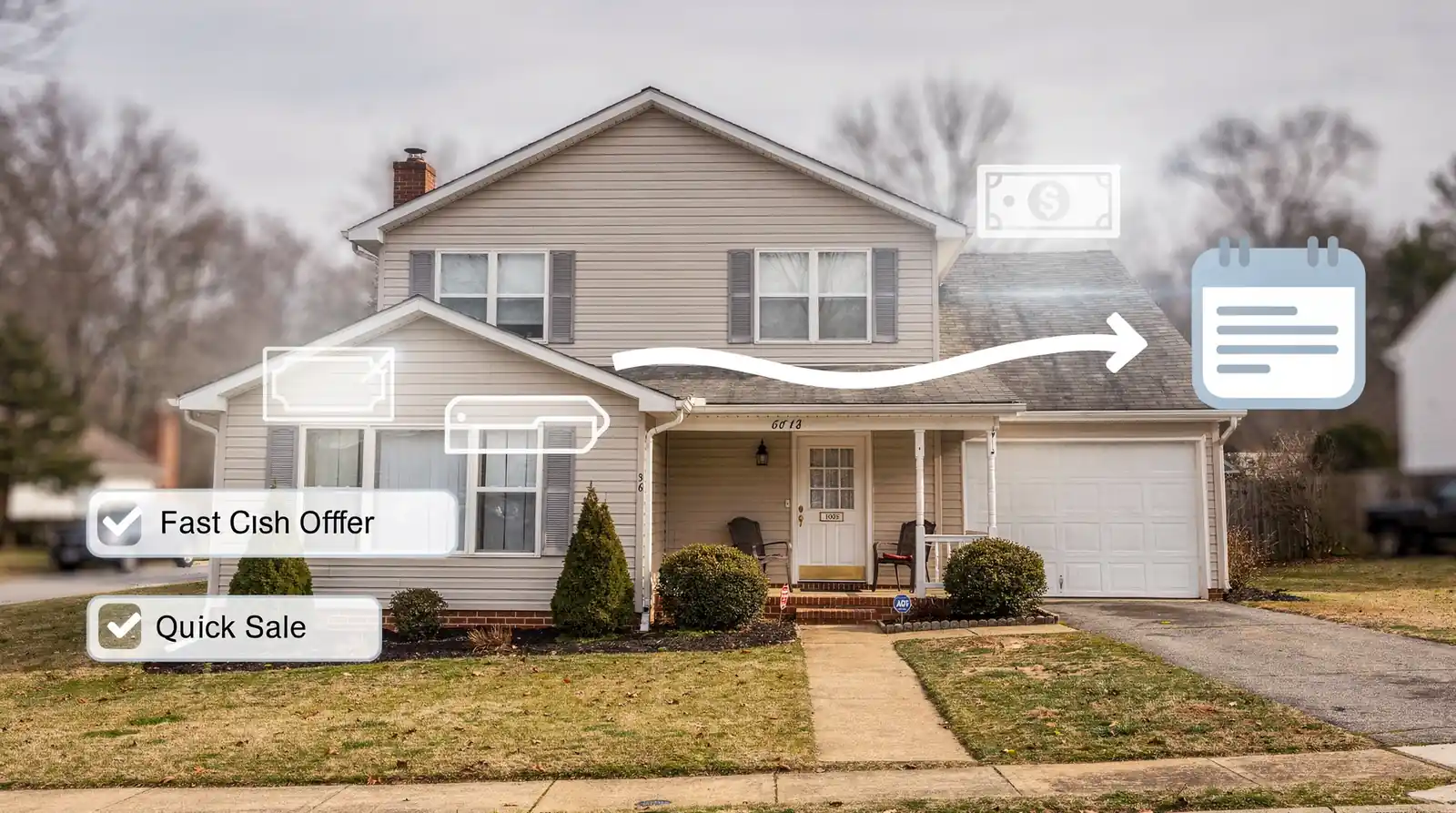
A cash home sale follows a short, predictable sequence rather than the multi-month path of a traditional listing. Sterling-area homeowners begin by submitting basic property details — address, condition, and reason for selling — for a buyer's review. This starting point sits at the heart of any solid cash buyer glossary. Every later term in the transaction builds on this first step.
Once a buyer reviews the submitted details, a homeowner can typically expect a cash offer within 24 to 48 hours. Closing often follows within about a week of accepting that offer. That pace is one reason homeowners facing tight timelines in Arlington or Alexandria look at cash sales as a practical alternative to a traditional listing.
Cost structure changes, too. Because a direct cash sale skips a real estate commission, many buyers absorb the closing costs themselves. A distinction worth knowing among the terms for cash sale homeowners encounter. Compare the two paths:
What happens between the offer and closing day? Real Estate Terms Explained
Between acceptance and closing, an established cash buyer verifies property details and prepares closing paperwork, including facilitating a thorough title search in Virginia. There's no lender underwriting delay to wait through, since no mortgage is involved. This shorter gap is a key piece of real estate terms explained for sellers unfamiliar with cash transactions.
Why does the process stay fast from start to finish?
Working with an established cash buyer keeps every stage — from the first phone call to the signed closing documents — fast and low-hassle. Real estate professionals in Northern Virginia, including closing attorneys familiar with local requirements and the proof of funds verification process, help maintain this efficiency. Understanding this sequence, along with the surrounding home sale glossary of terms, helps Northern Virginia homeowners judge whether a cash sale fits their situation.
What Does Selling 'As-Is' Actually Mean? Including 'As-Is Purchase Agreement' Insights
Selling a property "as-is" means the home changes hands without any promises about its condition or how well it functions for a particular use. This term appears constantly in a home sale glossary. Many Sterling-area homeowners hear it for the first time when they start exploring a faster way to sell. No warranty exists on the roof, the plumbing, the foundation, or anything else inside the walls. The buyer accepts the property exactly as it stands on the day of closing.
This distinction matters most for owners weighing repairs against a quicker sale. A cash buyer glossary entry for "as-is" usually pairs with another concept: the buyer purchasing in current condition, without demanding fixes first. Cash home buyers typically purchase a property regardless of its condition, which means a seller skips repairs and renovations entirely before closing. That single fact changes the math for a lot of homeowners who feel stuck.
When finalizing an as-is purchase agreement, local Virginia real estate disclosure laws require full transparency to protect both buyer and seller, a vital notation in any real estate terms explained glossary.
Does "as-is" mean the price drops automatically?
Not necessarily. It means the seller isn't obligated to negotiate repairs after inspection or spend money fixing issues before listing. Price still reflects the home's actual condition, but the seller avoids the back-and-forth of repair requests common in traditional sales.
Is an as-is sale only for homes in bad shape?
No, though it helps most when damage is significant. For homes with serious problems, like fire damage or water damage prevalent in some areas of Prince William County, an as-is sale lets the owner avoid the repair-and-list route altogether. Among the terms for cash sale worth learning, "as-is" ranks high because it directly shapes timeline and effort.
Among real estate terms explained for sellers considering a quick sale, "as-is" stands out as one of the most consequential:
- No repair obligations before closing
- No warranty on condition or systems
- Faster path for damaged or outdated properties
What Contract Terms Should Sellers Know? Including Earnest Money Deposit and Escrow Details
Contract language determines how smoothly a sale closes, and two terms cause the most confusion: escrow and contingency. A standard listing agreement relies heavily on this vocabulary. Opendoor's home-buying glossary notes that terms like these "can feel overwhelming. Especially if it's your first transaction." For homeowners in Sterling and the broader Northern Virginia area, understanding this real estate terms explained foundation matters before signing anything.
Escrow refers to a neutral third party holding funds and documents until every condition of the sale is met. In Virginia, the escrow process often involves licensed closing attorneys who ensure compliance with state regulations. A contingency is a condition that must be satisfied for the contract to move forward, such as financing approval or a satisfactory inspection. Traditional contracts stack several of these conditions together, which extends timelines and creates more opportunities for a deal to fall apart.
Another critical term is the earnest money deposit, a good faith payment from the buyer held in escrow to demonstrate commitment. Understanding how earnest money functions within a contract protects sellers during the negotiation and closing process.
Do damaged homes need different contract language?
Yes. Selling a home with fire or storm damage introduces documentation requirements a standard sale doesn't require, including insurance records and disclosure statements tied to the property's condition. These considerations shape how the contract gets written and what protections both parties need, especially under Virginia real estate disclosure laws.
What contract options exist for inherited property or foreclosure situations?
Homeowners managing an inherited property or racing against a foreclosure timeline often need contract structures built for speed rather than the multi-step process of a traditional listing agreement. A streamlined home sale glossary applies here. Terms shift when repairs, appraisals, and financing contingencies get removed from the equation. These simplified terms for cash sale situations reduce the number of clauses a seller must track, replacing a lengthy contingency list with a more direct agreement. Building a working cash buyer glossary before reviewing any contract gives homeowners the confidence to ask sharper questions and spot unfamiliar clauses early.
What Financial Terms Affect a Cash Sale? Including Proof of Funds and Absorption Rate
Three financial terms shape what a homeowner actually walks away with in a terms for cash sale transaction: net proceeds, financing contingencies, and absorption rate. Each one answers a different question about the deal. Understanding them prevents confusion later in the process.
A genuine cash offer works differently than most homeowners expect. The full stated amount goes to the seller, because no realtor commissions or hidden fees get subtracted before closing. This is the heart of what makes up a solid home sale glossary: transparent pricing means the number quoted is the number received, not a starting point for deductions.
Why does a cash sale skip financing contingencies?
No lender sits between the buyer and the property in a cash transaction. Traditional sales depend on mortgage approval, which brings appraisal requirements and financing contingencies. Conditions that let a buyer back out if financing falls through. Removing the lender removes those delays, which is why cash closings move faster and carry less risk of collapsing mid-process. Sellers should also note that proof of funds is typically required early in a cash sale to confirm buyer capability.
Absorption rate belongs on any real estate terms explained list, even though it sounds more technical than financial. This term measures how quickly available homes in a given area are selling. Markets with a fast absorption rate tend to support stronger offers, since demand outpaces supply. Slower absorption can push offers lower, reflecting more competition among sellers.
Here's how these terms compare side by side:
Knowing these terms turns an unfamiliar contract into a readable one. This is the foundation of any working cash buyer glossary.
How Do Cash Buyers Differ From Wholesalers? Real Estate Terms Explained
A genuine cash buyer purchases a home directly and closes with personal or business funds. A wholesaler acts as a middleman who never intends to own the property. This distinction matters for Sterling-area homeowners weighing offers. The two paths lead to very different closing timelines and levels of certainty. A cash buyer glossary entry for this term usually starts with speed and reliability. No lender approval stands between contract and closing.
Genuine cash buyers close faster and reduce the risk of a deal collapsing, precisely because no lender is involved in the transaction. Financing contingencies, appraisal delays, and underwriting surprises don't apply. That reliability is a major reason cash offers appeal to sellers who need certainty over a drawn-out process.
Not every self-described cash buyer fits that description, though. Some individuals present themselves as buyers while actually representing someone else behind the scenes. This practice has a formal name, and understanding it belongs in any solid set of real estate terms explained before a seller signs a contract.
What is a real estate wholesaler?
A real estate wholesaler places a seller under contract using a cash offer, then assigns that contract to a different buyer entirely. The wholesaler never closes on the home personally. Instead, the assigned buyer completes the purchase at the price the seller originally agreed to.
Recognizing this difference belongs in any practical home sale glossary. The buyer signing the contract may not be the one showing up at closing. Sellers reviewing terms for cash sale language benefit from asking directly whether a buyer intends to close personally or assign the contract elsewhere.
What Local Market Terms Matter Here? Northern Virginia Real Estate Terms Explained
Local market terms describe the specific towns and features that shape a cash sale in Northern Virginia. Sterling, Ashburn, Reston, Arlington, Alexandria, and Prince William counties each form part of a regional cash buyer network, and understanding this geography helps homeowners recognize how competitive their local options are. Skipping this context leaves sellers guessing about whether their offer reflects a broad market or a single buyer's narrow view.
What areas make up the Northern Virginia cash buyer market?
The Northern Virginia cash buyer market covers Sterling, Ashburn, Reston, Herndon, Arlington, Alexandria, and extends further into Fairfax and Prince William counties. Some definitions of this cash buyer glossary also include Leesburg among the nearby communities where cash purchases are common. For a homeowner, this matters because it confirms that cash buying isn't a one-town phenomenon limited to a single neighborhood. Multiple communities operate within the same regional market, which gives sellers several nearby points of comparison before committing to any offer.
What is an ADU, and why does it come up in home sale conversations?
An accessory dwelling unit, often shortened to ADU, is a small secondary home built on the same lot as the main house. Think of it as a guesthouse or converted garage apartment sharing the property line with the primary residence. This detail belongs in any home sale glossary because an ADU can change how a property is valued and marketed. A seller who understands this real estate terms explained distinction walks into pricing conversations with far more clarity. An ADU represents added living space that buyers and appraisers weigh differently than a standard single-family layout.
When Should You Use This Glossary? Expert Advice for Northern Virginia Sellers
Timing matters most before an offer arrives. Homeowners weighing a quick sale benefit from reviewing this cash buyer glossary at three key moments: before requesting an offer, while reading a contract, and when comparing a traditional sale to a cash sale.
Before any offer conversation begins, a seller needs a realistic picture of what a property is worth in its current state. A home with fire, water, or structural damage carries a different value than a move-in-ready one, and knowing how that damage affects price helps set expectations before numbers get discussed. Skipping this step often leads to disappointment when an offer arrives lower than hoped.
What does "as-is" mean for a homeowner selling fast?
An as-is sale means the buyer purchases the property in its current condition, no repairs required. This matters because sellers working with as-is cash buyers don't need to spend money fixing a roof, replacing carpet, or updating a kitchen before closing. Understanding this home sale glossary term early saves both time and unnecessary expense.
Why bother learning real estate vocabulary before selling?
Contracts and offers move fast in a cash sale, sometimes within days. Sellers who understand key terms for cash sale transactions ahead of time avoid confusion when reading documents or discussing timelines. A plain-English reference table like the one below breaks the process into digestible stages:
Reviewing these real estate terms explained in plain language, rather than industry jargon, gives sellers steadier footing at each stage. Confidence grows when the vocabulary stops feeling foreign.
FAQ
What is a cash buyer in real estate?
A cash buyer purchases a home outright without a mortgage lender, paying the full price directly and closing without loan approval or financing contingencies.
Is every cash buyer a real estate investor?
Not always. Cash buyers include individuals buying a primary residence and businesses purchasing properties as investments. What matters is that no lender approval delays closing.
How long does a cash home sale take with WeBuyNOVA in Northern Virginia?
Sterling homeowners submit property details, receive a cash offer within 24 to 48 hours, and typically close within about a week of accepting, facilitated by local closing attorneys experienced in Virginia real estate transactions.
What is a proof of funds, and why is it important?
Proof of funds is documentation confirming a buyer's ability to pay cash quickly. It is crucial in cash sales to assure sellers of the buyer's financial capability to close without delays.
What is a title search Virginia, and why does it matter?
A title search in Virginia is the process of examining public records to confirm a property's legal ownership and discover any liens or encumbrances. It is essential to ensure clear title transfer during closing.
What is an earnest money deposit?
An earnest money deposit is a sum of money put down by the buyer to demonstrate good faith in completing the transaction. It is held in escrow until closing or contract termination.
About the Author / Expertise
Eunice Johnson is a real estate expert with over a decade of experience in the Sterling, VA housing market. She specializes in helping Northern Virginia homeowners navigate the complexities of selling their homes quickly and efficiently, particularly through cash sales, and is passionate about educating sellers on their options with transparent, data-driven advice. As a cash home buyer at WeBuyNOVA, Eunice works directly with motivated sellers across Fairfax, Loudoun, Sterling, and Prince William counties to build realistic plans and move through the local market with clarity. Her practical approach and commitment to clear communication make her a trusted resource for homeowners looking to sell with confidence.
Contact Us
Ready to discuss a cash sale for your home? Reach out to WeBuyNOVA directly:
- Phone: 571-200-2365
- Email: [email protected]
- Book a consultation: Schedule a meeting with WeBuyNOVA
Conclusion
In closing, mastering real estate terms explained empowers you to navigate property transactions with confidence and clarity in Northern Virginia. Whether you're exploring traditional sales, considering cash offers, or building your market knowledge, understanding these essential terms transforms confusion into competence. Armed with this glossary, you approach every conversation—from initial inquiry through closing—as an informed participant rather than a passive observer. Real estate need not remain mysterious; knowledge is your foundation for making decisions that serve your interests and goals.