Real Estate Cash Buyer Glossary
Real Estate Cash Buyer Glossary
A real estate cash buyer glossary defines terms like "cash buyer," "as-is sale," and "closing costs" so Sterling-area homeowners understand offers without confusion. Cash buyers, as defined by industry sources, purchase homes without lender financing, which removes appraisal delays and reduces the risk of a deal falling through before closing.
Key Takeaways
- Cash buyers close real estate transactions faster than traditional financing methods require.
- WeBuyNOVA eliminates financing contingencies, reducing deal fall-through risk significantly for sellers.
- Cash purchases remove appraisal delays and lender requirements from the closing process.
- Real estate investors buying with cash offer sellers certainty and streamlined transaction completion.
What Does a Cash Buyer Mean to You?
A cash buyer means a faster, more certain sale for homeowners weighing their options. This individual or business entity purchases a house using cash instead of a mortgage, which removes an entire layer of the transaction. Understanding this term matters before accepting any offer, since not every "cash buyer" operates the same way.
For Sterling-area homeowners, the appeal comes down to speed and certainty. Cash buyers typically close faster than traditional buyers, and the deal carries a lower risk of falling through. No lender means no appraisal contingency, no financing approval, and no last-minute loan denial threatening the closing date.
Why Do Cash Offers Fall Through Less Often?
Lender involvement introduces multiple points of failure: underwriting delays, appraisal gaps, and financing conditions that can collapse a contract late in the process. A cash transaction skips those steps entirely. That difference alone explains why sellers facing tight timelines often lean toward cash offers.
Are All Cash Buyers the Same?
Not quite. Some people who present themselves as cash buyers are actually wholesalers representing a different buyer behind the scenes. Homeowners should ask directly who will hold title at closing. Whether the person making the offer is the actual purchaser.
A quick comparison helps clarify the distinction:
WeBuyNOVA operates as a cash home buying company based in Sterling, VA, serving homeowners throughout the surrounding Northern Virginia area. Knowing who sits across the table protects sellers from surprises down the line.

Which Terms Describe Selling As-Is for Cash?
Selling "as-is" means the buyer accepts a home in its current condition, no repairs required, no renovations expected. Ashburn Cash Home Buyers This single phrase sits at the center of any cash buyer glossary. It defines the entire transaction type. Homeowners in Sterling and surrounding Northern Virginia communities encounter this term often once they start researching faster ways to sell.
A clear set of real estate terms explained in plain language helps homeowners recognize what each phrase means for their bottom line. Cash home buyers in the region purchase properties in any condition, whether that means outdated kitchens, roof damage, or deferred maintenance piling up for years. That condition-free purchase eliminates a cost homeowners often dread most: repairs before listing.
What Does "As-Is" Actually Cover in a Cash Sale?
"As-is" covers the physical state of the property at the time of sale, not just cosmetic issues. Structural problems, outdated systems, and unresolved maintenance all fall under this term. A homeowner never pays out of pocket to fix these items before closing.
Why Do Fees and Commissions Matter in This Glossary?
Fees and commissions matter because they directly reduce what a seller walks away with. A proper home sale glossary separates "offer amount" from "net proceeds,". The gap between them often comes down to these charges.
Key terms for cash sale transactions include:
- As-is sale: no repairs or renovations required before closing
- Realtor commission: a fee removed entirely in most cash transactions
- Closing costs: expenses many cash buyers absorb on the seller's behalf
- Hidden fees: charges that a transparent cash offer does not include
Transparent pricing matters because it protects the full offer amount. When commissions and hidden fees disappear from the transaction, sellers see pricing that matches what actually reaches their bank account.

What Timeline Terms Will Sellers Hear?
Timeline terms describe how quickly a cash sale moves from first contact to final payment. Sellers researching a home sale glossary often find these terms confusing because traditional listings use a different clock entirely. Understanding these terms for cash sale situations removes the guesswork before a homeowner ever picks up the phone.
A standard cash sale moves through three stages: a quick property review, a cash offer delivered within 24 to 48 hours, and a closing that often happens within a week. Ashburn Cash Home Buyers Each stage has a purpose. The review confirms the home's condition and basic details. The offer stage gives the seller a firm number to consider. Closing is where ownership officially changes hands.
How long does a cash closing usually take?
Most cash closings wrap up within one to two weeks. That window covers signing paperwork and transferring ownership, two steps that can stretch for months in a financed sale. Sellers working with a local buyer sometimes see closings finish in a matter of days rather than weeks.
Why do cash sales close faster than traditional ones?
Speed comes from what's missing, not what's added. A cash offer skips the public listing process entirely. It also avoids the financing delays that come with mortgage approval, underwriting, and lender appraisals.
These timeframes give sellers a realistic planning tool, not just a sales pitch.
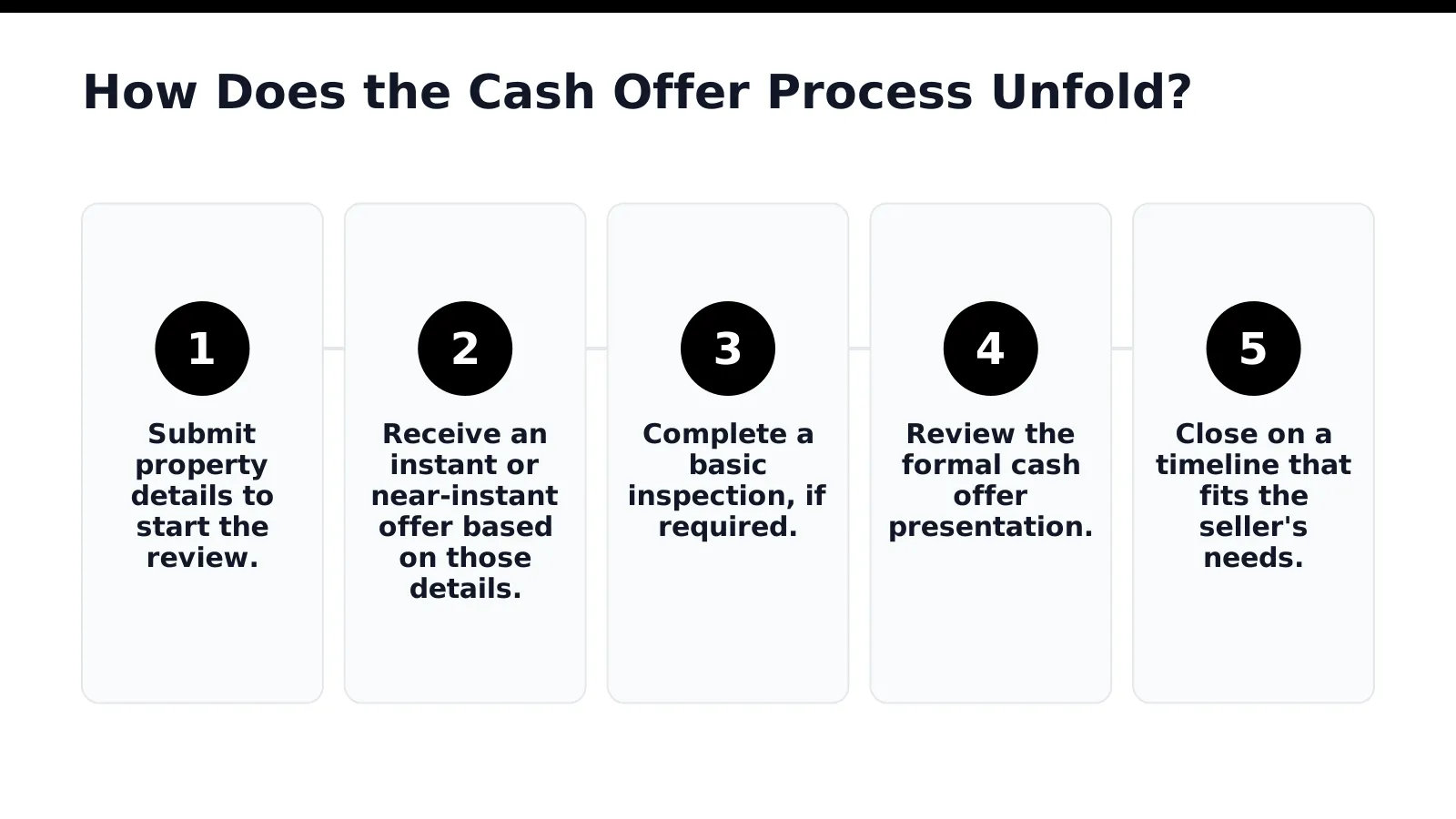
How Does the Cash Offer Process Unfold?
Four stages move a cash sale from first contact to closing day: an initial offer, a property assessment, a formal offer presentation, and a streamlined closing. Homeowners share basic property details, and a preliminary number often arrives within a short window. From there, the transaction follows a predictable path rather than the unpredictable back-and-forth of a traditional listing.
Reviewing a cash buyer glossary before starting the process helps homeowners recognize each milestone as it happens. Confusing paperwork becomes manageable once real estate terms explained in plain language replace industry jargon. A clear home sale glossary turns an unfamiliar process into a short checklist anyone can follow.
The typical sequence looks like this:
- Submit property details to start the review.
- Receive an instant or near-instant offer based on those details.
- Complete a basic inspection, if required.
- Review the formal cash offer presentation.
- Close on a timeline that fits the seller's needs.
What Documents Should Homeowners Gather Beforehand?
Gathering key paperwork, such as proof of ownership and prior repair records, speeds up the inspection step. Small repairs are worth considering too, since tidy, documented homes often move through assessment faster. These small steps can also support a stronger offer once the buyer completes its review.
Why Do Cash Buyers Close So Quickly?
Cash buyers are typically investors or companies with funds already available, so no mortgage approval slows things down. That readiness allows closing within days rather than the weeks or months a financed sale usually requires. Knowing the terms for cash sale transactions, like "as-is" and "proof of funds," helps sellers understand why speed is possible here.
Each stage builds on the last, moving from a simple submission of details to a finished closing. For Sterling-area homeowners weighing a fast sale, understanding this sequence removes much of the guesswork from deciding whether a cash offer fits their timeline.
Why Do These Terms Matter for Local Sellers?
Clear definitions protect Northern Virginia homeowners from confusion at the exact moment they need confidence most. A solid cash buyer glossary turns unfamiliar contract language into plain, usable knowledge. Sellers who understand these real estate terms explained in advance avoid surprises during negotiations and closing.
Local market knowledge matters too. Cash buying companies operate across Alexandria, Arlington, Fairfax, Loudoun, and Prince William counties, each with its own pricing patterns and timelines. Knowing the vocabulary behind a cash offer helps a Sterling-area seller compare options accurately, rather than guessing at what a term implies.
What's the Real Benefit of Learning This Vocabulary?
Vocabulary knowledge translates directly into better decisions. A seller who understands a home sale glossary can spot favorable terms, like repair-free closings, without relying solely on a buyer's explanation.
Cash transactions skip the repair demands common in financed sales. That single difference, once understood, saves sellers both time and money that would otherwise go toward inspections or renovations.
Does This Knowledge Change the Outcome of a Sale?
Yes. Sellers fluent in terms for cash sale transactions typically experience three advantages:
- Speed: faster timelines than a traditional listing
- Certainty: fewer surprises once a deal is underway
- Convenience: less paperwork confusion along the way
These benefits compound when sellers recognize terminology early, rather than learning it mid-negotiation.
FAQ
What is a cash buyer in real estate?
A cash buyer purchases a house using cash instead of a mortgage, removing lender involvement entirely. This eliminates appraisal contingencies, financing approval, and the risk of a last-minute loan denial.
Does a cash offer always come from the actual buyer?
Not always. Some cash buyers are wholesalers who contract the home then assign it to another buyer. Homeowners should ask who holds title at closing.
What does selling a house "as-is" for cash mean?
Selling as-is means the buyer accepts the home in its current condition, covering the property's physical state, without requiring repairs or renovations beforehand.
Conclusion
In closing, mastering real estate terminology transforms how you approach property transactions and conversations with professionals. These definitions equip you with the language to ask informed questions, understand contracts, and navigate negotiations with confidence. Whether you're selling, buying, or exploring your options, this glossary serves as your reference guide to demystify the process and make clearer, more strategic decisions about your property.