Northern Virginia Home Seller Disclosures and Local Property Regulations NOVA
Northern Virginia Home Seller Disclosures and Local Property Regulations NOVA
Virginia's Residential Property Disclosure Act (§ 55.1-700, Code of Virginia) requires Northern Virginia sellers to provide buyers a disclosure statement, with updated requirements effective July 1, 2026, prompting necessary due diligence. Certain transfers fall under exclusions in § 55.1-702. WeBuyNOVA purchases Northern Virginia homes as-is for cash, helping heirs and distressed owners bypass disclosure complexities and sell on their own timeline.
Key Takeaways
- Virginia Residential Property Disclosure Act (§ 55.1-700 et seq.) requires sellers to provide mandatory disclosures to buyers.
- Effective July 1, 2026, sellers must complete the updated Residential Property Disclosure Statement form for all transactions.
- Sellers disclose known property defects including structural issues, mechanical systems, and environmental concerns to facilitate buyer due diligence.
- Northern Virginia home sellers comply with state disclosure requirements protecting both parties throughout the sales process.
What Rules Govern Home Sellers in Northern Virginia?
Virginia's Residential Property Disclosure Act sets the statewide foundation for local property regulations nova homeowners must follow when selling. This law, found in Section 55.1-700 of the Code of Virginia, spells out what sellers owe buyers in terms of honest information before a sale closes. Skipping these steps creates legal exposure that can follow a seller long after the closing table.
Not every transfer falls under this law, though. Virginia law excludes certain residential property transfers from the standard disclosure requirements, which is a critical detail when applying local seller rules to unique situations like inherited homes or foreclosure sales. A property passing through a trust, a sale between family members, or a transfer tied to a court order may follow a different path than a typical listing.
Is the Disclosure Form Changing Soon?
Yes. An updated residential property disclosure statement becomes effective July 1, 2026. Sellers across Northern Virginia need to track this update closely, since outdated forms could create compliance gaps during a sale.
What Kinds of Issues Must Sellers Disclose?
Disclosure obligations cover a wide range, from structural defects to unusual property history. Questions can even extend to reported hauntings or a sagging porch, according to Virginia REALTORS®. This broad scope is exactly why many owners seek county regulations home sale guidance before putting a property on the market.
Property Issue Type: Examples Structural: Foundation cracks, roof damage Mechanical: HVAC, plumbing, electrical Environmental: Flooding history, drainage problems Unusual: Reported disturbances, prior deaths
Understanding property compliance nova standards early prevents costly disputes after closing.
What Must Sellers Disclose Under Virginia Law?
Virginia requires sellers to provide a disclosure notice so buyers can complete their own due diligence before closing. This notice does not list every defect in a Northern Virginia property. Instead, it informs buyers that they bear responsibility for inspecting the home and investigating conditions that matter to them, from aging HVAC systems in a Fairfax County split-level to drainage concerns on a wooded Loudoun County lot.
Local seller rules stem from a specific statute: the Residential Property Disclosure Act. This law sets the statewide framework that governs what sellers across Northern Virginia, including Arlington, Prince William, and Alexandria, must provide to buyers.
On the standard disclosure form, owners typically make no representations or warranties about the property's condition. No promises about the roof, foundation, or systems get made unless the seller chooses to disclose specific known issues voluntarily.
Does the disclosure form guarantee the home is in good condition?
No. The form exists to shift due diligence onto the buyer, not to certify that a property meets any particular standard. A seller signing the standard notice is not vouching for the condition of appliances, structural elements, or title matters.
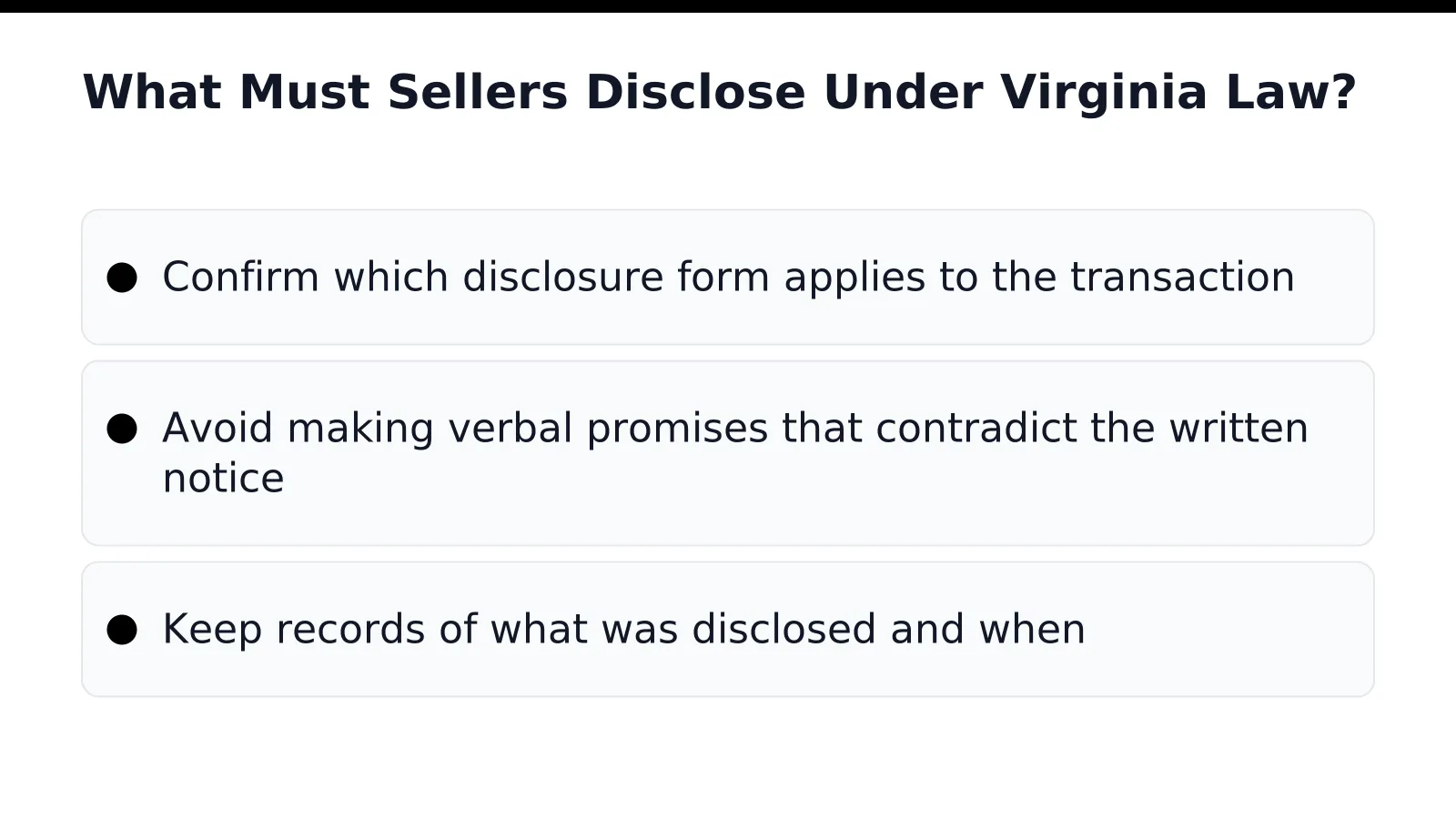
Property compliance nova sellers care about most involves getting this paperwork right the first time:
- Confirm which disclosure form applies to the transaction
- Avoid making verbal promises that contradict the written notice
- Keep records of what was disclosed and when
Who should sellers ask about disclosure questions?
Legal consequences attach to disclosure obligations, so an attorney should answer specific compliance questions. County regulations home sale situations, especially inherited properties or distressed sales, often carry extra legal nuance that a licensed Virginia attorney can address directly.

Which County Rules Apply Across Northern Virginia?
No single rulebook governs every Northern Virginia closing. Alexandria, Arlington, Fairfax, Loudoun, and Prince William counties each run their own closing procedures. A seller's experience depends heavily on where the property sits. Skipping this step costs sellers time at the settlement table and, in some cases, delays the entire sale.
WeBuyNOVA works across these local property regulations nova by handling cash purchases in all five localities, adjusting its process to match each jurisdiction's requirements. A rural parcel in Loudoun County rarely closes the same way as a rowhome in Alexandria. Recognizing that difference early prevents last-minute surprises.
Why does county regulations home sale vary so much?
Each county sets its own administrative steps for recording deeds, verifying title, and finalizing closing paperwork. These county regulations home sale differences explain why service across Loudoun County, Ashburn, and Alexandria can look noticeably different from one neighborhood to the next, even within the same region.
Do statewide disclosure exemptions override county requirements?
Not entirely. Some residential property transfers are excluded from Virginia's statewide disclosure requirements, but that exemption does not erase county-level closing obligations. A seller exempt from certain disclosures may still face local seller rules tied to the locality itself.
Sellers juggling inherited homes or distressed properties benefit from understanding this layered structure:
- Statewide disclosure law sets the baseline.
- Each county layers on its own closing procedures.
- Property compliance nova ultimately depends on matching both the state rule and the local one.
Treating county requirements as an afterthought creates unnecessary risk at closing.

What Exemptions and Special Cases Apply?
Certain property transfers across Northern Virginia fall outside the standard statewide disclosure requirement, including specific inherited or distressed sale situations. The Virginia Department of Professional and Occupational Regulation confirms that some residential transfers are excluded from the full disclosure rule entirely. Heirs and distressed owners dealing with these situations should understand which local seller rules actually apply to their circumstances before assuming the strictest standard applies.
Inherited property is the most common exception homeowners in Alexandria, Arlington, Fairfax, Loudoun, and Prince William counties encounter. These sales often require probate authority before an heir can legally transfer the home. Probate adds legal documentation and timing requirements that standard listings rarely face, which complicates traditional sale paths for grieving families.
Does inherited property need to go through probate before selling?
Many inherited homes do require probate before a sale can close legally. Executors or heirs need court-recognized authority and specific paperwork to prove they can transfer the property. Skipping this step creates legal exposure for the seller, regardless of county regulations home sale timelines elsewhere in the process.
Can an inherited home be sold without repairs first?
Yes, heirs can sell inherited homes as-is in most cases. Cash buyers purchasing probate or inherited property commonly skip repair demands and staging costs altogether. This matters for property compliance nova purposes, since sellers avoid renovation delays while the estate still moves toward settlement.
Fast cash transactions offer a practical path through these exceptions. Closings in as little as 7 to 14 days help heirs resolve probate paperwork. Disclosure questions without months of uncertainty. Understanding local property regulations nova early prevents costly surprises during an already difficult transition.
How Can Sellers Stay Compliant and Move Fast?
Selling as-is for cash answers both problems at once. Repair bills disappear, and the timeline shortens for owners juggling property compliance nova deadlines tied to disclosure forms or title issues. Virginia homeowners facing inherited property, foreclosure, or deferred maintenance often need speed as much as they need legal accuracy.
Cash sales solve the speed problem directly. Buyers purchasing homes across Loudoun County and the broader Northern Virginia region frequently close in roughly 7 to 14 days. That pace matters when local seller rules require disclosure paperwork completed before a transfer. A slow traditional sale leaves more room for compliance gaps to surface.
Does selling for cash still require following disclosure rules?
Yes. A faster closing does not remove the legal obligation to disclose known property conditions. County regulations home sale requirements still apply, regardless of how quickly the transaction closes.
What should sellers check before listing?
Owners should confirm which disclosures apply to their property type and locality before signing anything. Reviewing local property regulations nova early prevents last-minute delays or disputes after closing.
A fast, as-is sale gives sellers facing compliance deadlines a practical alternative to the traditional market:
- Fewer repair demands and inspection contingencies
- Closing timelines measured in days to weeks rather than months
- Less exposure to drawn-out negotiations over disclosure items
WeBuyNOVA, based in Sterling, VA, serves sellers throughout Northern Virginia who need a buyer familiar with these timing and disclosure pressures. For homeowners weighing a quick, compliant exit, a direct cash offer removes much of the guesswork from the process.
FAQ
What law governs home seller disclosures in Northern Virginia?
Virginia's Residential Property Disclosure Act (§ 55.1-700, Code of Virginia) requires sellers to provide buyers a disclosure statement before closing, forming the foundation for local property regulations across Northern Virginia.
Are all property transfers subject to disclosure requirements?
No. Certain transfers fall under exclusions in § 55.1-702, such as transfers through trusts, between family members, or tied to court orders, following a different path than typical listings.
How can Northern Virginia sellers avoid disclosure complexities?
WeBuyNOVA, based in Sterling, VA, purchases Northern Virginia homes as-is for cash, helping heirs and distressed owners bypass disclosure complexities and sell on their own timeline.
Conclusion
In closing, understanding Northern Virginia's disclosure requirements and property regulations empowers you to navigate the selling process with confidence and clarity. These rules exist to protect both buyers and sellers, ensuring transparent transactions built on complete information. By familiarizing yourself with what must be disclosed. Which regulations apply to your property, you eliminate uncertainty and position yourself for a smoother sale. Whether you're preparing your home for market or exploring your options, this knowledge transforms complexity into actionable steps forward.
Contact
- 📞 Phone: +1 (571) 200-2365
- ✉️ Email: [email protected]
- 📅 Consultation: Get a Cash Offer
- 🌐 Website: webuynova.com
WeBuyNOVA serves sellers in Sterling, VA and the surrounding Northern Virginia area.