Divorce Home Sale: Selling Your Home During Divorce in Northern
Divorce Home Sale: Selling Your Home During Divorce in Northern
By WeBuyNOVA Editorial Team · Updated 2026-08-29
Selling a house during divorce in Northern Virginia — or clearing an estate through probate — often means dividing assets or settling a sale quickly, often without repairs, showings, or agent commissions. WeBuyNOVA, based in Sterling, VA, purchases properties as-is for cash, closing in as little as 7 days, giving divorcing couples and estate executors a faster, lower-stress path to settlement.
Equitable distribution governs Virginia marital homes. Selling before your divorce is final may allow couples to claim a larger joint capital gains exclusion than they would individually after the divorce is finalized, subject to IRS eligibility requirements. WeBuyNOVA, based in Sterling, VA, buys houses for cash to simplify divorce or probate sales across Northern Virginia.
Divorcing couples and estate executors looking to sell house as is in Sterling, VA and across Northern Virginia work with WeBuyNOVA, one of the region's established cash home buyers Northern Virginia families turn to for a straightforward sale. Virginia's equitable distribution law gives both spouses a stake in sale proceeds, so WeBuyNOVA closes quickly, charges no realtor commissions or fees, and simplifies property division during divorce or probate inheritance.
Key Takeaways
- Virginia law requires equitable distribution of marital home value between both spouses during divorce proceedings.
- Northern Virginia detached homes in Arlington average close to $1.5 million, making property division financially significant.
- Selling the family home before divorce finalization resolves the largest asset dispute more efficiently than post-divorce sales.
- WeBuyNOVA in Sterling, VA purchases houses for cash, offering quick sales during divorce or probate situations.
Who Legally Controls the Marital Home Sale?
Ownership of the marital home belongs to both spouses under state law, regardless of whose name appears on the deed, which is the starting point for any divorce home sale Northern Virginia courts will recognize. Virginia Code Section 20-107 governs equitable distribution, the legal framework treating marital property as a shared asset subject to court oversight. Neither spouse holds unilateral authority to list, price, or sell the property alone during a divorce home sale.
Equitable distribution does not mean the home splits automatically down the middle. Courts weigh contributions, debts, and individual circumstances before approving how proceeds get divided between spouses. What stays consistent is the requirement that both spouses generally consent to a sale; a title or settlement company then disburses net proceeds according to the couple's property settlement agreement or a judge's order.
Does one spouse need the other's signature to sell?
Yes. Both spouses typically must agree before a Northern Virginia marital home goes to market. Without that agreement, a closing cannot proceed, and the title company cannot release funds. This requirement protects each party's financial stake. It can slow a quick divorce property sale when spouses disagree on timing or price.
What if the home was inherited instead of jointly purchased?
Estate executors and heirs face a different legal path entirely. Property passing through probate follows court-supervised administration rather than equitable distribution. That distinction is why probate house sale assistance often centers on executor authority and court paperwork instead of spousal consent.
These rules carry real financial consequences, so general guidance rarely covers every situation. Talking with a Virginia divorce attorney remains the only reliable way to get answers suited to a specific deed, marriage, and settlement timeline. WeBuyNOVA works alongside sellers' legal counsel throughout Northern Virginia, structuring cash offers that satisfy court and settlement requirements without adding repair costs or agent commissions to an already complicated process.
Should You Sell Before or After Divorce Finalizes?
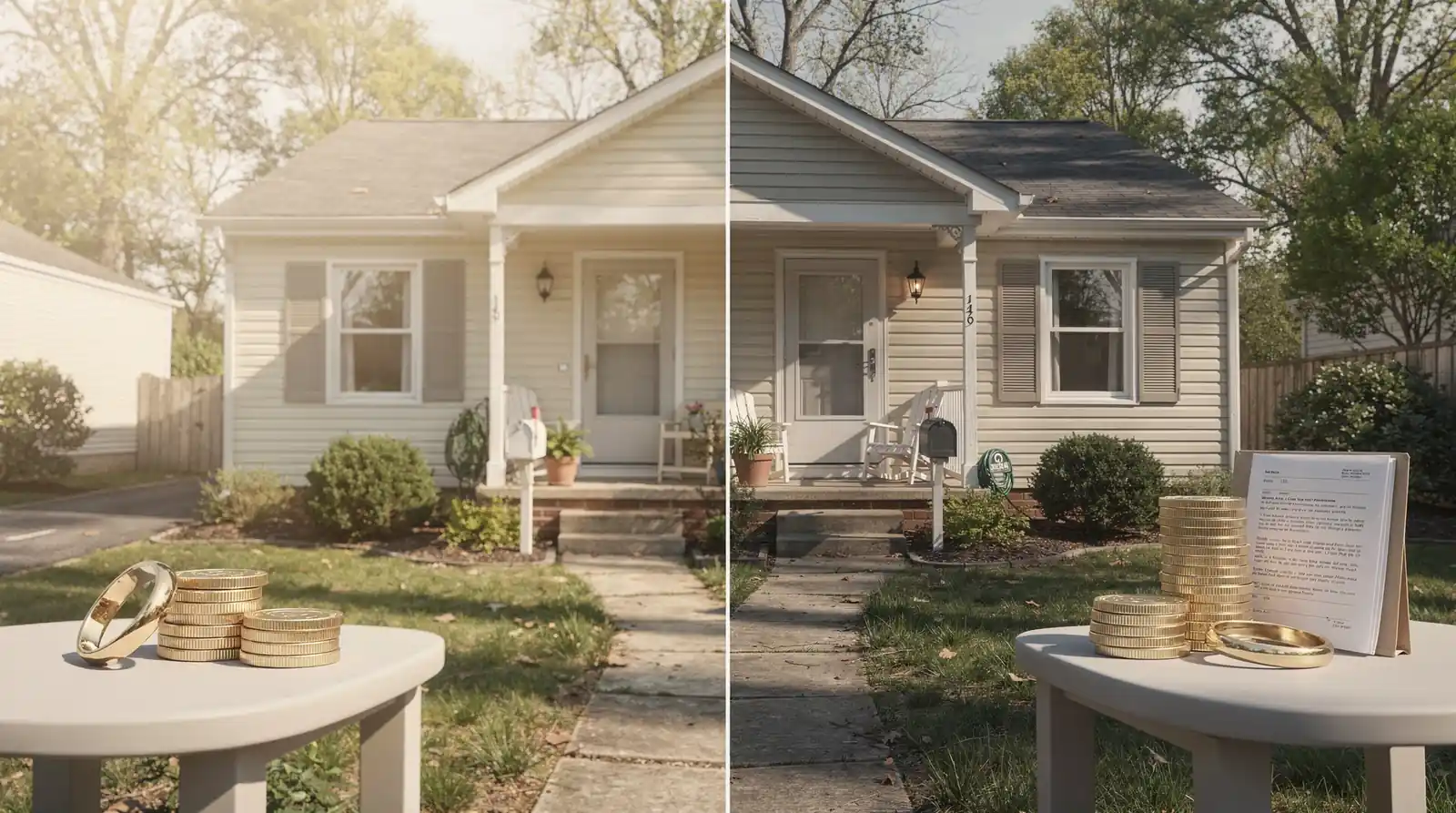
Timing determines how much money a divorcing couple keeps after selling a Northern Virginia home. A divorce home sale completed while both spouses remain legally married may preserve a larger joint capital gains exclusion than a sale completed after the divorce, when each spouse would generally file individually — a potentially costly difference for homeowners across Fairfax, Loudoun, Prince William, and Arlington counties, subject to IRS eligibility requirements. Sellers should consult a tax professional to confirm how the exclusion applies to their specific circumstances.
That gap raises the central question for every separating couple: sell now, or sell later?
Does selling before finalization save money?
Potentially. Selling before the divorce closes may keep a larger joint exclusion intact, shielding more of the home's appreciation from taxation, provided IRS eligibility requirements are met. Waiting until after finalization generally reduces that protection for each spouse filing individually. For a quick divorce property sale, timing the closing before the decree becomes final may help preserve more equity. Outcomes depend on individual tax circumstances.
What should couples weigh before choosing a timeline?
Beyond taxes, couples must consider whether selling immediately or after finalization produces a better outcome overall. Some homeowners prioritize speed and certainty; others weigh market timing against emotional readiness to close a chapter.
| Factor | Sell Before Finalization | Sell After Finalization |
|---|---|---|
| Capital gains exclusion | Joint exclusion (subject to IRS eligibility rules) | Individual exclusion per spouse (subject to IRS eligibility rules) |
| Decision-making | Requires spousal agreement | May involve court order |
| Financial clarity | Clean split of net proceeds | Proceeds divided per settlement |
Before negotiating any sale terms, an accurate home valuation matters most. It establishes exactly what value exists to divide. For couples with an inherited property or estate involved, probate house sale assistance can clarify ownership questions before a valuation moves forward.
What's Driving Northern Virginia's Hot Divorce Market?
Property values across the region explain much of the urgency behind today's divorce-driven home sales. For most Northern Virginia families, the marital residence is the largest financial asset and the most emotionally charged decision of the entire divorce process. Splitting that asset fairly — and quickly — has become a defining challenge for separating spouses.
Regional pricing data shows why the stakes run so high. Detached homes in Arlington now average close to $1.5 million. Values across Fairfax, Loudoun, and Alexandria have climbed substantially over the past decade. Mortgage rates hovering near 6% in 2026 add pressure. Buying out a spouse's share or refinancing a shared mortgage costs more than it did years earlier.
Why does timing matter so much right now?
A July 2025 change to Virginia law shortened the window for challenging a court-ordered home sale. That shift narrows the timeline available for a divorce home sale, leaving less room for delay tactics or disputes. Homeowners who wait risk losing negotiating position once a court order takes effect.
Is this a good time to sell during a divorce?
Northern Virginia homeowners going through divorce currently hold a historically strong position. Equity levels remain high, and homes continue to sell fast. A well-executed quick divorce property sale can produce a clean financial reset for both parties, dividing proceeds without a prolonged listing period.
Key market conditions shaping divorce sales:
- Arlington detached-home values averaging close to $1.5 million
- Sustained ten-year appreciation across Fairfax, Loudoun, and Alexandria
- 2026 mortgage rates near 6%, raising buyout and refinance costs
- A shortened 2025 legal window for contesting court-ordered sales
For estate executors managing property alongside a separation, probate house sale assistance follows the same urgency, since inherited homes face identical market-timing pressure.
How Does Probate Property Sale Work Here?
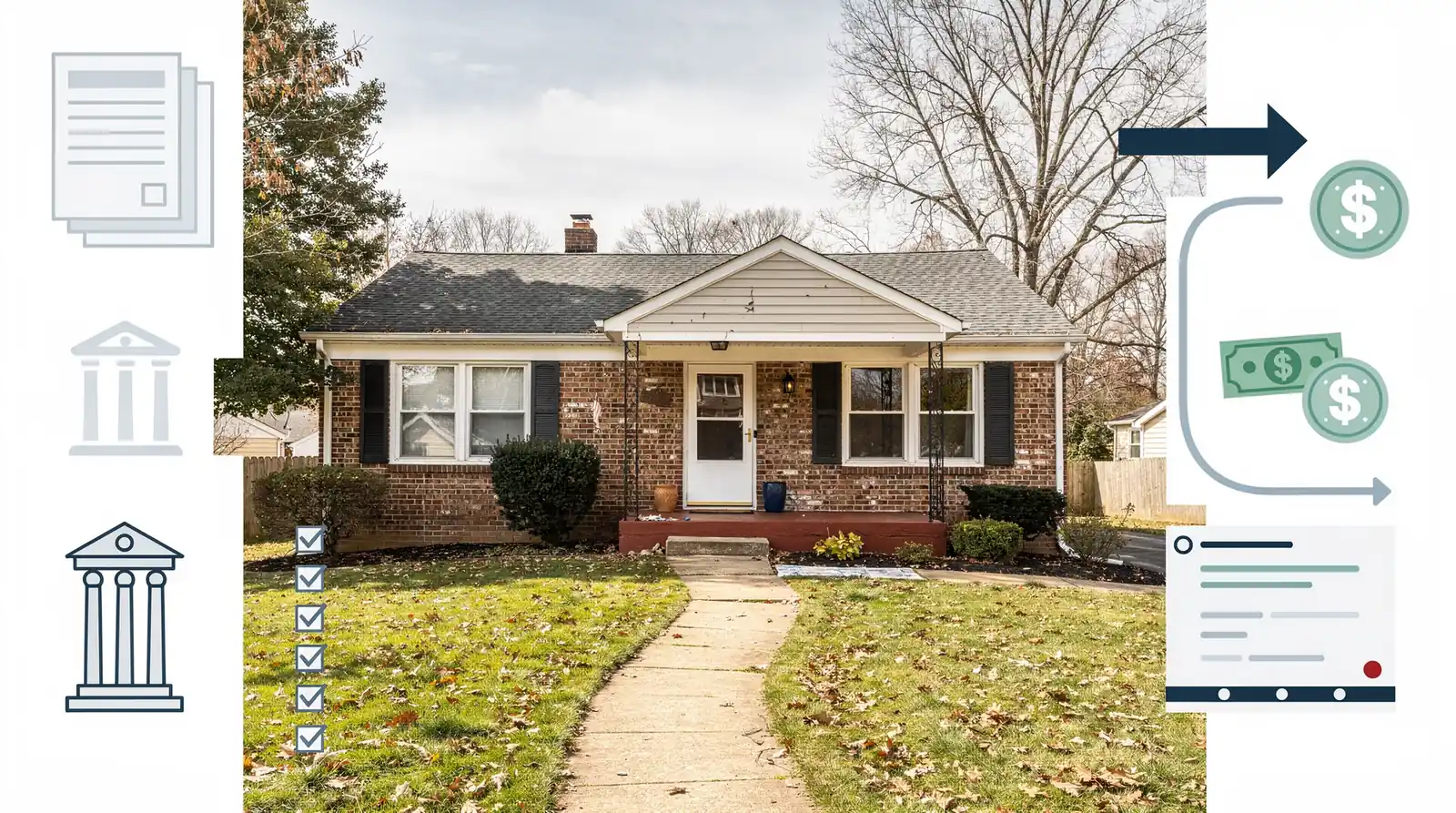
Executors and heirs in Northern Virginia face a longer road than a standard resale. Probate sales across the region, including Loudoun County, typically require court approval before a transaction can close, and that approval process adds extra legal steps most sellers don't anticipate. A judge must sign off on the sale terms, which can stall a listing for weeks while paperwork moves through the system.
Estate properties also tend to need repairs that heirs have neither the time nor budget to handle. Selling as-is for cash eliminates repair bills entirely and shortens the timeline considerably, which matters when multiple heirs are waiting to settle an estate. Probate house sale assistance from a cash buyer removes much of that friction.
What makes probate sales different from a typical listing?
Court oversight sets probate apart. Every offer, and often the closing itself, needs judicial sign-off before funds change hands, unlike a conventional resale where sellers negotiate freely.
Can a cash buyer help with an inherited property?
Yes. Cash buyers offer a proven, streamlined path for navigating an inherited property sale, sidestepping the delays common to traditional listings. WeBuyNOVA, based in Sterling, VA, serves sellers throughout Northern Virginia with fast offers and minimal hassle.
Families juggling estate matters alongside a divorce home sale or a quick divorce property sale face similar pressure: court involvement, multiple decision-makers, and a shrinking timeline. In both scenarios, a cash sale approach cuts through:
- No repair costs before closing
- No waiting on buyer financing
- Faster movement through required approvals
How Fast Can You Close With Cash?
Closing timelines with cash buyers serving Northern Virginia typically run 7 to 14 days from accepted offer to funded sale. That speed matters enormously for divorcing spouses and estate executors who need finality, not months of showings and negotiations. A traditional listing in Fairfax, Loudoun, Arlington, or Alexandria can take weeks to attract offers and additional weeks to reach settlement, leaving both parties in financial limbo.
For a divorce home sale, timing carries legal weight beyond convenience. Courts and settlement agreements often set deadlines for dividing proceeds, and a slow sale delays everyone's next chapter.
Does a Faster Closing Save Money Too?
Yes. Cash transactions generally involve fewer closing costs and less back-and-forth than agent-listed sales. That reduction matters directly in a quick divorce property sale, where a fast, uncomplicated closing keeps more proceeds in each spouse's pocket. Every dollar saved on commission gets split equally between both spouses under Virginia's equitable distribution framework.
Can a Fast Sale Prevent Foreclosure?
It can. Selling quickly to a cash buyer stops foreclosure proceedings. Delivers immediate financial relief to homeowners facing missed payments or legal pressure. Estate executors managing an inherited property often face similar time constraints. probate house sale assistance through a cash buyer avoids months of holding costs, taxes, and upkeep on a home nobody currently occupies.
Speed, in these cases, is not a convenience. It is the difference between control and crisis.
FAQ
Who controls the sale of a marital home in Northern Virginia?
Both spouses hold ownership under Virginia's equitable distribution law, regardless of whose name is on the deed, so neither can sell unilaterally. A title company releases proceeds per a settlement agreement or judge's order.
How does timing affect capital gains on a divorce home sale?
Selling before the divorce finalizes may allow couples to claim a larger joint capital gains exclusion than they would filing individually after the divorce, subject to IRS eligibility requirements. This makes timing significant for maximizing proceeds. Sellers should consult a tax professional to confirm how the exclusion applies to their situation.
How does selling an inherited home differ from a divorce home sale?
Inherited property goes through court-supervised probate administration instead of equitable distribution. Probate sales center on executor authority and court paperwork rather than spousal consent.
Conclusion
Navigating a property sale during divorce or probate proceedings demands clarity, efficiency, and professional guidance tailored to Northern Virginia's specific legal and market conditions. Title complications and timeline pressures make these transactions complex, and a strategic approach protects your financial interests while expediting resolution. Working with professionals who understand both the legal framework and local real estate dynamics gives divorcing couples and estate executors a clear path to settlement.
About the Author
Eunice Johnson is a real estate expert with over a decade of experience in the Sterling, VA housing market. As a cash home buyer at WeBuyNOVA, she works with motivated home sellers throughout Northern Virginia to build realistic plans and navigate the complexities of selling a home quickly and efficiently, particularly through cash sales. Eunice is committed to transparent, data-driven advice and clear, straightforward communication, helping divorcing couples and estate executors understand their options so they can move forward with confidence.
Contact Us
Ready to discuss your divorce or probate home sale in Northern Virginia? Reach out to WeBuyNOVA directly:
- Phone: 571-200-2365
- Email: [email protected]
- Book a Consultation: Schedule a meeting with WeBuyNOVA