Distressed Property Valuation: Valuing Distressed in Sterling, VA
Distressed Property Valuation: Valuing Distressed in Sterling, VA
Distressed property valuation reflects a home's as-is market worth by comprehensively assessing various factors including structural integrity, necessary repairs, property age, and visible or hidden damage. For Sterling homeowners, these valuations frequently reveal a value notably lower than standard retail prices due to the added costs and risks associated with property distress. WeBuyNOVA ensures a transparent and expeditious process, providing a fair cash offer within 24 hours, with all closing costs covered and no commissions or repairs required from the seller. Get a cash offer
Key Takeaways
- Distressed property valuation assesses the home’s current market worth, factoring in all repairs, age-related decline, and damage.
- A distressed property refers to homes facing foreclosure, bank-owned properties, or those repossessed by mortgage lenders due to financial distress.
- The critical calculation of After Repair Value (ARV) incorporates subtracting rehab costs, holding expenses, closing fees, and investor profit from the anticipated resale price.
- Structural and mechanical failures severely reduce as-is home value, far exceeding the impact of cosmetic issues like outdated kitchens or worn flooring.
- Understanding the interplay of property condition, market forces, and repair costs is essential to accurately gauging property worth and sale strategy options.
What makes a property 'distressed'?
A distressed property is one burdened by financial hardship leading to foreclosure threats or ownership transfer to a bank or lender. Beyond financial strain, these properties often suffer from significant physical neglect and deterioration due to deferred maintenance and inability to fund repairs.
Distress encompasses more than an impending auction; it signals the presence of serious physical problems such as long-unaddressed roof leaks, foundation cracks, outdated electrical or plumbing systems, and other issues that severely impair habitability and marketability. This creates a cyclical problem where financial constraints limit maintenance, further degrading property condition and complicating conventional sales.
How does condition affect a distressed property's value?
The property’s physical condition is pivotal in capping its market value. Traditional appraisal methods and online Automated Valuation Models (AVMs) often rely heavily on comparable sales of well-maintained, turn-key homes. Such models inadequately capture the true value of distressed homes burdened with costly repairs. Severe issues like HVAC failure and structural damage significantly widen the valuation gap relative to other neighborhood properties.
Comprehensive inspection and expert evaluation are vital to understanding the impact of each repair cost and deferred maintenance issue on market value and sale potential.
What is the fastest way to sell a distressed home?
Selling directly to a cash buyer expedites the process by removing customary hurdles such as listing, repair, and commission costs. WeBuyNOVA purchases houses quickly for cash in any condition. The streamlined approach eliminates the need for repairs, staging, or prolonged marketing. Sellers receive an accurate, as-is home value assessment and a firm cash offer property appraisal often within 24 hours, translating to fast closings sometimes within days.
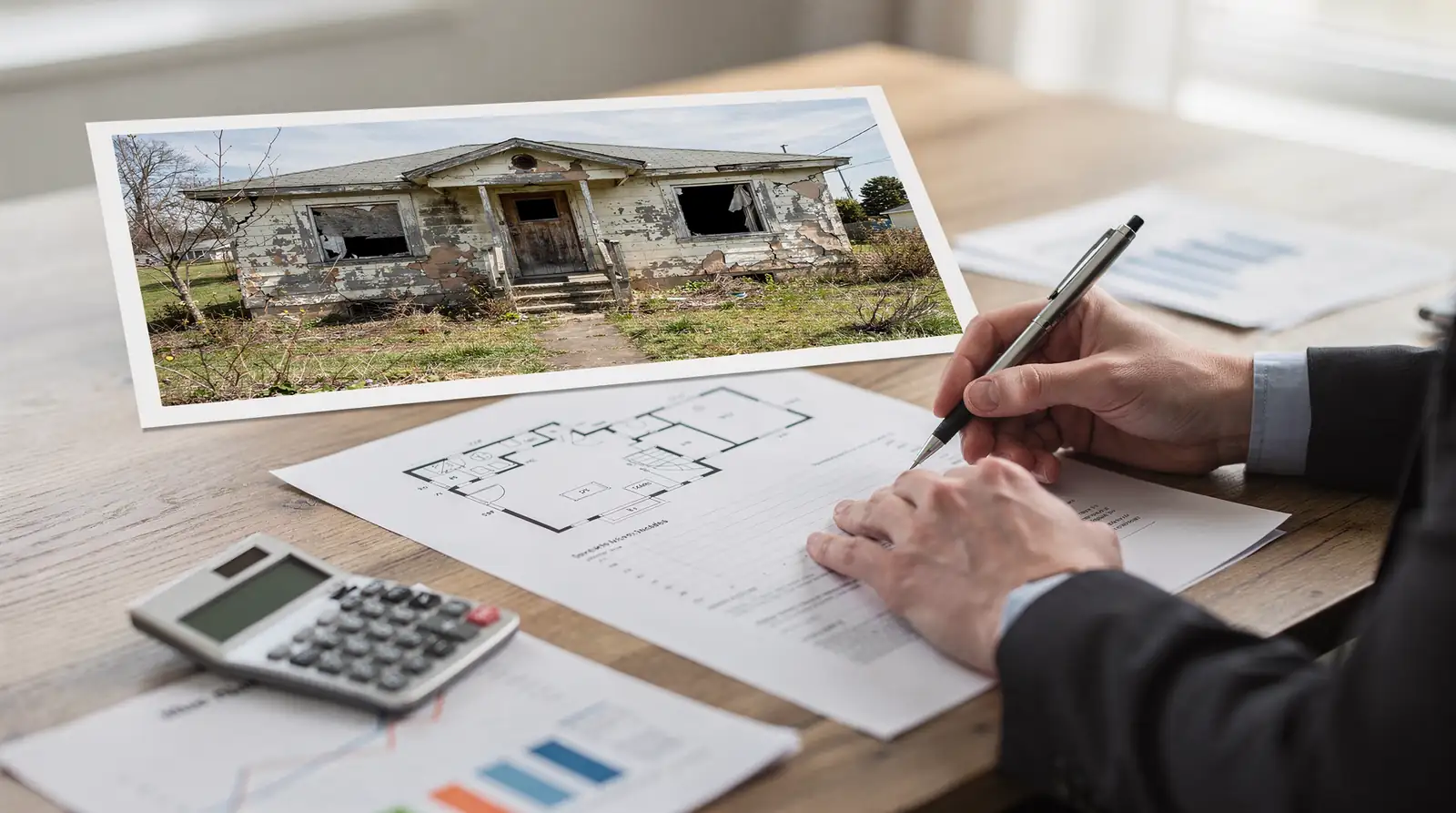
How is distressed property valuation calculated?
The starting point in a distressed property valuation is the After Repair Value (ARV), which estimates the property's market price post-renovation. From this benchmark, investors subtract comprehensive cost estimates involved in bringing the property to market-ready condition to arrive at the realistic as-is home value the seller can expect.
What costs get subtracted from the After Repair Value?
The calculation involves four main cost categories:
- Rehab and Repair Costs: Detailed and realistic estimates for structural, mechanical, cosmetic, and compliance repairs necessary to achieve ARV.
- Holding Costs: Ongoing expenses during renovation and sale preparation, including property taxes, insurance, utilities, and loan interest.
- Closing Costs: Transaction costs the investor incurs upon resale, such as transfer taxes, title insurance, and agent fees.
- Investor Profit Margin: The required return on investment compensating for risk, time, and capital commitment.
This rigorous approach ensures the resulting as-is home value encapsulates all relevant expenses to provide a transparent market offer.
How does a cash offer property appraisal differ from this formula?
A cash offer property appraisal applies the ARV minus expenses framework but operates with expedited valuation processes tailored to quicker deals. WeBuyNOVA consistently utilizes this methodology to deliver fair, no-obligation cash offers within 24 hours. Sellers benefit from simplified transactions requiring no repair negotiations or commission payments. By assuming all renovation risks and closing costs, the buyer presents a consolidated net offer. Sellers thus gain clarity on net proceeds without threat of unexpected deductions post-agreement.
What factors impact as-is home value in Northern Virginia?
An as-is home value embodies the market’s valuation of a property in its current condition—without benefits from repairs or upgrades. Distinctly, major structural or mechanical deficiencies cause the largest value depressions. Conversely, cosmetic detriments primarily affect buyer perception rather than core marketability.
Why do some repairs hurt value more than others?
Surface-level repairs, such as repainting or updating fixtures, influence negotiation but rarely dictate sale viability. In contrast, systemic failures—foundational cracks, compromised roofing, or failing HVAC systems—significantly restrict financing options as many lenders reject homes with such defects. This restriction reduces potential buyer pools to cash investors, directly diminishing cash offer property appraisal amounts.
What hidden issues make a home harder to sell?
Beyond visible repairs, legal and regulatory complications like unpermitted additions, municipal code violations, and uninsurable conditions severely challenge sale prospects. Unpermitted construction risks liens and forced removal, while code violations may impose fines and compliance mandates. Lack of insurability disqualifies many buyers relying on financed purchases. Weighing these liabilities critically affects distressed property valuation and requires expert analysis.
Does fixing everything before selling pay off?
Pre-sale renovation is often a financial gamble. Renovation expenses frequently exceed the incremental increase in sale price, especially if costly repairs do not align with market expectations. Sellers risk eroding equity by investing unwarranted resources. Selling as-is to buyers like WeBuyNOVA circumvents these risks, eliminating the need for repairs, cleanouts, or staging, offering financial and psychological relief from renovation burdens.
How does a cash offer property appraisal differ from a traditional sale?
A cash offer property appraisal focuses on the current condition and renovation projections, deriving an immediate and guaranteed offer. Traditional appraisals assess market value based on fully updated, compliant properties, offering a higher theoretical figure but neglecting real-world costs incurred before sale completion.
What costs does a traditional sale appraisal ignore?
Traditional appraisals do not reflect net proceeds post-sale. Sellers shoulder repair expenses, agent commissions, and buyer concessions, all diminishing take-home amounts. While appraisal numbers appear favorable, actual payouts, especially on distressed homes, typically fall short of nominal valuation.
How does an as-is appraisal calculate value?
An as-is home value appraises the property without assumed improvements, subtracting investor rehabilitation costs and holding expenses from projected resale values. Though headline prices are lower than traditional appraisals, sellers retain the complete cash offer, free from commissions or closing cost deductions.
Why does the closing timeline affect the real value?
Transaction speed substantially influences financial outcomes. Traditional sales may take months, accruing ongoing carrying costs such as mortgage payments, insurance, utilities, and maintenance. Cash sales close swiftly, often within a week, eliminating these expenditures and mitigating market fluctuations. This immediacy justifies a competitive distressed property valuation emphasizing liquidity and certainty over uncertain future price maximization.
How can you determine your home's true bottom line?
Determining a home’s bottom line involves critically comparing the as-is home value against full renovation expenses and potential risks. This comprehensive view transcends idealized market pricing, offering realistic expectations of net equity extraction. Without this analysis, sellers risk investing substantial funds that may not be recovered.
The process begins with sourcing recent, neighborhood-specific comps for fully renovated properties, establishing the After Repair Value (ARV) ceiling. Subsequently, obtaining detailed contractor estimates or using local standard repair cost metrics (e.g., price per square foot) grounds renovation budgeting in reality. Structural repairs, such as roof replacements or foundation remediation, quickly erode ARV advantages.
What costs do homeowners overlook when calculating their bottom line?
Holding costs significantly erode equity during prolonged renovations. Mortgage payments, taxes, insurance, and utilities accumulate monthly, often silently consuming potential profits. Additionally, managing contractors, permits, inspections, and living conditions amid construction imposes uncalculated financial and emotional strain.
How does a cash offer simplify the bottom-line calculation?
A cash offer property appraisal obviates extensive renovation budget uncertainties by delivering a firm purchase price based on current property condition. WeBuyNOVA provides confidential consultations with no obligation, and issues offers within 24 hours. Sellers receive transparent figures inclusive of all costs, enabling clear, stress-free financial decisions without worries over unforeseen expenses or market delays.
Why Choose WeBuyNOVA for Distressed Properties in Sterling and Northern Virginia?
WeBuyNOVA stands out in the Northern Virginia market for its expertise in handling distressed property valuations and quick cash offers tailored to the unique challenges of these homes. Their seasoned team understands local market trends and repair cost structures, providing reliable valuations and hassle-free sales. This approach safeguards sellers from the uncertainties of traditional sale methods and costly repair investments.
Committed to transparency, WeBuyNOVA offers detailed explanations of their valuation and offer processes, ensuring homeowners make informed decisions with complete clarity about anticipated proceeds and timelines. By absorbing renovation responsibilities, closing costs, and agent commissions, they deliver true convenience and financial predictability.
Comprehensive Repairs Estimation: A Critical Component
Accurate repair estimation underpins a trustworthy distressed property valuation. Variability in contractor bids, unforeseen hidden damages, and fluctuating material costs necessitate expert analysis. WeBuyNOVA blends market knowledge with extensive network relationships to produce precise cost assessments that reflect current economic conditions in Sterling and surrounding Northern Virginia areas.
Clients benefit from this expertise as it ensures offers realistically consider necessary expenditures, avoiding undervaluation that delays sales or overvaluation that jeopardizes deal completion.
Understanding Cash Offer Property Appraisal Benefits
The cash offer property appraisal method merges transparency, speed, and financial certainty. Its benefits include:
- Immediate liquidity without repair or staging delays.
- Elimination of agent commissions, closing costs, and contingency deductions.
- Reduced stress and administrative burden for homeowners.
- Protection from market volatility and holding cost accumulation.
- Streamlined closing process customized to seller timelines.
For Sterling and Northern Virginia homeowners, this model delivers a compelling alternative to conventional selling paths, especially under financial duress or property distress.
Conclusion
Distressed property valuation encapsulates a nuanced evaluation balancing current market conditions, physical property status, repair and holding costs, and investor expectations. In Sterling and the broader Northern Virginia region, WeBuyNOVA offers an advanced, transparent pathway for homeowners facing the complexities of selling distressed properties. Their service ensures fair and expedient sales that alleviate burdens and maximize net proceeds under challenging circumstances.
Contact WeBuyNOVA
- 📞 Phone: (571) 200-2365
- ✉️ Email: [email protected]
- 🌐 Website: webuynova.com
- 📍 Service Area: Northern Virginia & surrounding counties (Service Area Business — no physical street address).