Cash Offer Calculation: How Cash Buyers Calculate Offers
Cash Offer Calculation: How Cash Buyers Calculate Offers
quick cash offernet cash offer
By WeBuyNOVA Editorial Team · Updated 2026-09-06
Expert Author Section: WeBuyNOVA Investment Team
The insights in this article are provided by the WeBuyNOVA investment team, a group of seasoned real estate underwriters and investors with over 15 years of combined experience specializing in Northern Virginia's housing market. Our team rigorously analyzes regional data, market trends, and property conditions to deliver precise and reliable cash offer calculations. This expertise ensures our quick cash offer valuations are grounded in local market realities, giving sellers confidence in the net cash offer they receive.
Understanding how cash home buyers calculate offers starts with comparable-sales data, then subtracting repair costs, holding costs, and resale profit margin, the fair cash offer on house formula behind every valuation. Traditional cash buyers typically pay 50–70% of fair market value because they assume renovation expenses and resale risk. WeBuyNOVA evaluates property condition, local Northern Virginia market trends, and repair needs to deliver a fair, transparent cash offer within 24 hours.
Key Takeaways: Understanding Quick Cash Offer and Cash Offer Calculation
- Traditional cash buyers calculate offers at 50–70% of fair market value to cover repairs and resale costs as part of the cash offer calculation.
- We factor repair expenses, holding costs, and profit margins into every offer we present to homeowners, ensuring a transparent net cash offer.
- Quick cash offers close in 14–21 days without appraisals, inspections, or financing contingencies slowing down the process.
- Transparent pricing means you see exactly how we arrive at your offer before making any decisions regarding how is cash offer calculated.
What Exactly Is A Cash Offer?

A cash offer means a buyer pays the full purchase price of a home without relying on a mortgage loan or any other financing. No lender stands between the offer and the closing table. That structure removes the financing contingency that derails so many traditional sales. It forms the foundation of any cash offer calculation.
Cash transactions make up a meaningful slice of the national housing market. According to ATTOM Data Solutions, all-cash purchases form a consistent share of single-family and condo sales nationwide. That pattern shows cash sales are not a fringe option. They represent a well-established path for sellers who need certainty over speed alone.
WeBuyNOVA, based in Sterling, VA, buys homes directly across Northern Virginia using this same cash-purchase model. Homeowners who want to sell house as is in Northern Virginia, whether they're facing repairs, foreclosure, or a tight timeline, often benefit most from working with a local buyer who understands regional property values.
How Is Cash Offer Calculated? Step-by-Step Breakdown
The question of how cash offer is calculated typically hinges on detailed assessments of the property's current condition, local comparable sales, estimated rehab costs, and holding and closing expenses. At the center of this process sits the after repair value ARV cash offer figure, the baseline every other deduction works from.
- After Repair Value (ARV): This is the estimated market value assuming the property is fully repaired and renovated. It is derived from recent market comparable sales (comps) in your specific Northern Virginia area, such as Loudoun County or Fairfax County.
- Estimated Repair Costs: Calculate all necessary repairs including structural fixes (roof, HVAC), cosmetic updates (paint, flooring), and any other renovations needed.
- Holding and Closing Costs: Estimated costs for holding the property during renovation (taxes, insurance, utilities) plus transaction closing costs. These usually amount to around 10% of the ARV. Sellers typically pay zero closing fees in cash transactions.
- Investor Margin or Minimum Required Return: This represents the profit margin an investor requires, accounting for market risk and capital investment. This is often around 8-12% of the ARV depending on volatility.
- Net Cash Offer: The final amount presented to the seller, calculated by subtracting all above expenses from ARV.
The calculation formula is:
Net Cash Offer = ARV - (Repair Costs + Holding & Closing Costs + Investor Margin)
Understanding the 70% Rule Versus Local Northern Virginia Market Dynamics
Traditional investors often use a simple benchmark called the "70% Rule," which suggests purchasing properties for no more than 70% of the ARV minus repair costs, to ensure a profitable investment after costs. This translates as:
Offer Price <= 70% of ARV - Repair Costs
However, WeBuyNOVA's cash offer calculation adjusts this model to incorporate precise local market data from Northern Virginia, where property values and repair costs may fluctuate more significantly, requiring a tailored approach to ensure fair and competitive offers.
Detailed Northern Virginia Case Study: Numerical Example

Here is a concrete example of cash offer calculation for a single-family home in Sterling/Fairfax County to illustrate how each component affects the net cash offer:
This example demonstrates a typical quick cash offer calculation in Northern Virginia. The net cash offer reflects the true cash amount a seller would receive, free from repair costs or seller-paid closing fees.
Scenario Comparison: Quick Cash Offer Calculations Across Different Rehab Levels
To understand how varying renovation scopes affect the net cash offer, below is a comparison for typical Northern Virginia locations (Sterling, Herndon, Reston, Alexandria):
This side-by-side comparison helps homeowners anticipate how different rehab needs influence the final cash offer, underscoring the importance of accurate repair estimates and local market knowledge in the cash offer calculation.
Self-Assessment Guide: How Homeowners Can Estimate Their Net Cash Offer
- Gather Comparable Sales Data: Search for recent home sales similar to your property in your neighborhood via Zillow, Redfin, or local MLS to estimate your After Repair Value (ARV).
- Inspect Your Property Thoroughly: Identify repairs needed including structural, systems, cosmetic, and landscaping aspects. Consider a professional inspection if possible.
- Estimate Repair Costs: Assign monetary values to repair items, based on contractor quotes or regional averages ($20,000 minor, $50,000 moderate, $95,000 extensive).
- Calculate Holding Costs: Multiply expected ownership time (2-4 months) by monthly property taxes, insurance, utilities, and maintenance, then add estimated closing costs (typically zero for sellers in cash deals).
- Determine Minimum Desired Return: Factor in an investor’s profit margin, often 8-12% of ARV, reflecting investment risk and capital deployment.
- Estimate Net Cash Offer: Use formula: ARV minus (Repair Costs + Holding Costs + Minimum Return).
- Reach Out to Local Cash Buyers: Use your estimates to compare with offers from trustworthy buyers like WeBuyNOVA for an informed decision.
Documents and Details for a Smooth Cash Offer Calculation

- Property Title and Deed
- Recent Comparable Sales Data
- Inspection Reports or Maintenance Logs
- Contractor Repair Estimates
- Property Tax and Utility Bills
- Current Property Photographs or Videos
- Mortgage and Liens Information if applicable
- Disclosure Statements Related to Property History
Organizing these documents expedites the cash offer calculation and enables a faster quick cash offer process.
What Does a Quick Cash Offer Include? Understanding the Net Cash Offer
A quick cash offer includes the full agreed purchase price minus any closing costs assumed by the buyer. The seller receives a net cash offer that leaves them free from repair expenses, staging costs, or agent commissions. Particularly in Northern Virginia, sellers face zero closing fees in cash transactions, which enhances total net proceeds.
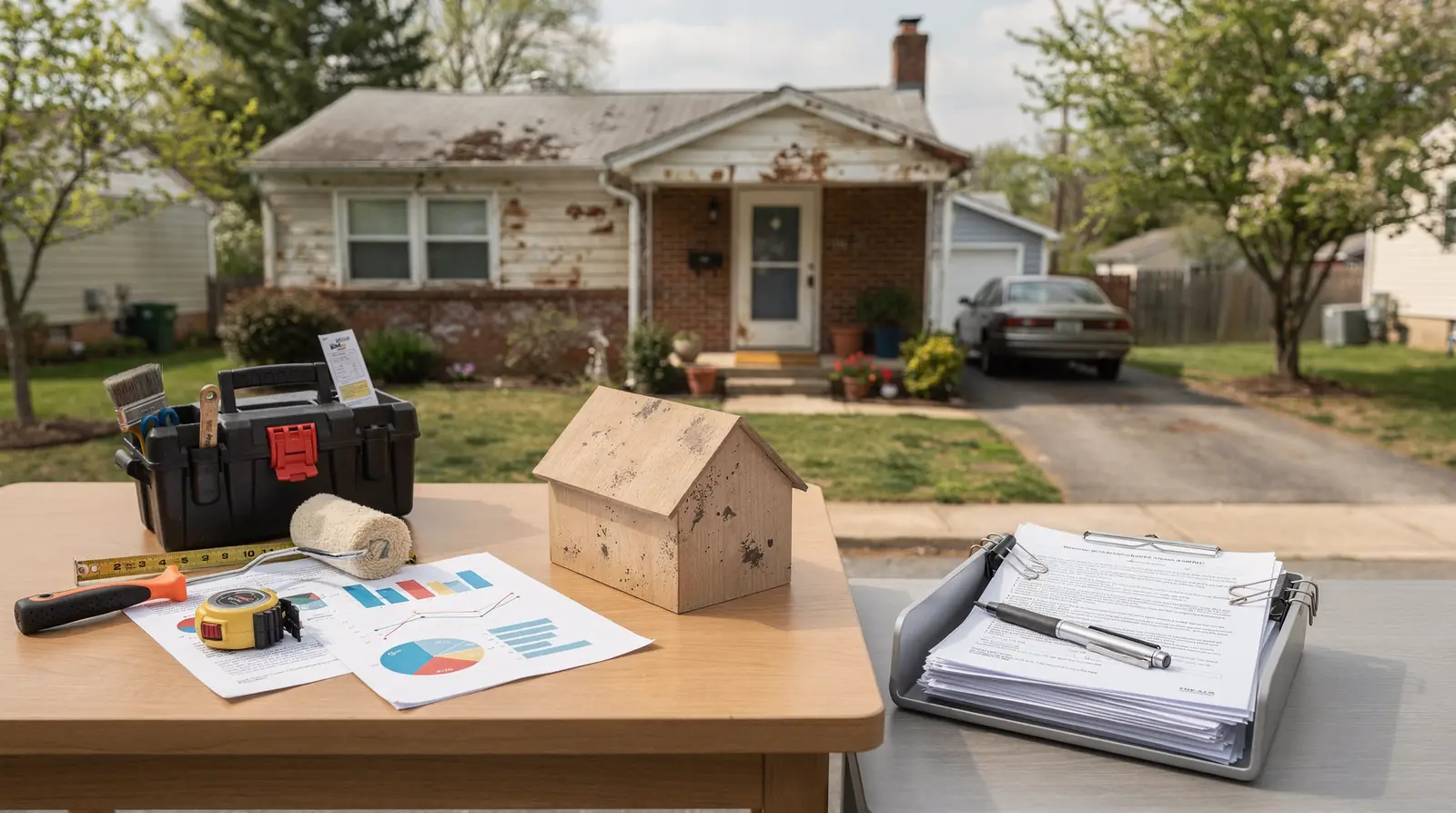
How Buyers Calculate Your Offer: Detailed Understanding of Cash Offer Calculation
Cash buyers base offers primarily on repair costs, local market comparables, and current property condition rather than bank appraisals. Knowing this cash offer calculation method helps sellers assess whether an offer reflects true value or undervalues the home.
Main Factors in Cash Offer Calculation
- Repair Costs: Line items such as roofing, HVAC, foundation, painting, and flooring.
- Market Comparables: Recent sales data from Loudoun and Fairfax Counties establish the ARV baseline.
- Property Condition & Location: Higher offers reflect better condition and desirable neighborhoods.
Buyers also factor in speed and certainty by eliminating repair and closing costs, resulting in faster quick cash offer closings and higher net cash offers received by sellers.
Operating locally in Sterling, VA allows WeBuyNOVA’s evaluators to use precise knowledge of Northern Virginia’s market dynamics for accurate quick cash offer calculations.
Distinguishing the Net Cash Offer From Initial Estimates

The net cash offer is the actual cash the seller receives after all costs and deductions. Unlike traditional sales involving repair bills and commissions, WeBuyNOVA handles paperwork internally and covers closing costs, making the net cash offer more transparent and favorable.
Cash Offer Calculation Adjustments for Distressed Properties
Distressed properties undergo a specialized distressed property valuation considering:
- Severity and extent of repairs
- Local market activity and sales velocity
- Urgency and condition factors such as pre-foreclosure status
Regardless, the fundamental cash offer calculation process remains consistent to ensure fairness and transparency.
Why Cash Offers Are Typically Lower Than Market Value

Cash offers reflect price discounts that compensate buyers for immediate certainty, no repairs, and no financing contingencies. Unlike market value, which assumes waiting through inspections and financing approvals, cash sales prioritize speed and simplicity.
The cash offer calculation bases price on current condition rather than potential after renovation, eliminating repair work and compressing the timeline.
Trade-offs favor sellers wanting speed and ease over maximum top-dollar pricing, including benefits like:
- No repair expenses before closing
- Lower closing costs than traditional sales
- Reduced negotiation over inspections
- Faster access to cash proceeds
Is a Lower Cash Price a Bad Deal?
Not necessarily. The net cash offer often narrows the apparent price gap versus a traditional sale once fees, commissions, and repair costs are factored. Sellers gain certainty, speed, and less transactional risk by accepting a quick cash offer.
How Fast Can You Receive a Quick Cash Offer?
Quick cash offers typically arise within days of initial property submission. Sellers in Loudoun County often close well ahead of financed buyers stuck waiting on loan approvals. Speed is crucial for homeowners facing foreclosure or tight deadlines.
Because cash offer calculation provides a clear upfront number, back-and-forth is minimized. WeBuyNOVA structures the sale process to allow closing in as few as 7 days. Nationally, cash sales typically close within 7 to 21 days since no lender or appraisal contingencies interfere.
Why As-Is Sales Close Faster Than Financed Ones
Removing repairs eliminates delays from contractor bids and renegotiations, speeding the transaction. This difference in the net cash offer structure can reduce the typical timeline by weeks.
Can a Cash Offer Help Avoid Foreclosure Deadlines?
Homeowners facing pre- or active foreclosure deadlines benefit from the speed of cash deals. WeBuyNOVA offers foreclosure solutions for homeowners in these situations, allowing owners to close quickly and avoid further credit damage.
Understanding how is cash offer calculated helps explain the expedited process, as key factors such as property condition, market comps, and lack of financing contingencies streamline the timeline.
Spotting a Fair, Trustworthy Quick Cash Offer

A legitimate quick cash offer comes with verified proof of funds, written offer terms, and respect for inspections. Sellers in distressed situations should be cautious to avoid predatory buyers, especially as fewer closing costs and less negotiation characterize authentic cash sales.
Warning Signs of Untrustworthy Cash Buyers
- No verified proof of funds
- Pressure to skip inspections
- Refusal to provide written offers
- Unclear or inconsistent pricing explanations
Encountering these signs should prompt caution and further investigation.
Is a Cash Offer Always the Best Financial Choice?
Not always. Sellers with well-maintained homes and ample time typically net more on the open market than with a quick cash offer. Cash sales trade some price for speed and certainty, a beneficial trade-off primarily for those under time or financial pressure.
Understanding how is cash offer calculated empowers homeowners to weigh these factors carefully.
FAQ: Cash Offer Calculation & Quick Cash Offer Process
What Factors Determine How Cash Buyers Calculate an Offer?
Cash buyers base offers on comparable sales data, minus repair, holding, and resale profit costs. Property condition and local market trends heavily influence the final cash offer calculation.
Why Do Traditional Cash Buyers Pay Less Than Fair Market Value?
This discount covers repair expenses, holding and closing costs, and ensures a minimum profit margin before resale.
What Does a Quick Cash Offer Include for Sellers?
A quick cash offer includes the purchase price minus closing costs borne by the buyer, yielding a net cash offer free of repair bills, staging expenses, or agent commissions, frequently with zero seller closing fees in Northern Virginia.
How Do Market Comps in Northern Virginia Affect the ARV?
Market comparables from Loudoun and Fairfax Counties provide the baseline for the ARV, with neighborhood desirability and recent sale prices directly impacting the cash offer calculation.
What Types of Repair Costs Are Typically Included?
Repair estimates include major structural elements and cosmetic improvements, each contributing to the deducted repair costs within the offer calculation.
Are There Seller Closing Fees with a Quick Cash Offer?
Generally, reputable buyers absorb closing costs, resulting in zero closing fees for sellers and increasing net cash proceeds.
Conclusion
Understanding how cash buyers compute offers equips homeowners with the knowledge to evaluate proposals effectively. Using detailed property assessments, Northern Virginia market comps, carefully estimated holding costs, and repair expenses, this clear and transparent approach provides sellers with fair quick cash offers and accurate net cash offers. Armed with these insights, sellers can confidently make decisions aligned with their financial goals and timelines.
About the Author
Eunice Johnson
Eunice Johnson is a real estate expert with over a decade of experience in the Sterling, VA housing market. She specializes in helping homeowners navigate the complexities of selling their homes quickly and efficiently, particularly through cash home buying. Eunice is passionate about educating sellers on their options and providing transparent, data-driven advice to ensure they receive the best possible outcomes. Her deep knowledge of local market trends and commitment to client satisfaction make her a trusted resource for homeowners looking to sell with confidence.
As a cash home buyer at WeBuyNOVA, Eunice works with motivated home sellers throughout Northern Virginia to build realistic plans and navigate the local market. Her practical approach and commitment to clear communication make her a trusted partner for sellers seeking to sell their home fast for cash.
Contact Us
Ready to discuss a cash sale for your home? Reach out to WeBuyNOVA, serving Sterling, VA and the surrounding Northern Virginia area:
- 📞 Phone: +1 (571) 200-2365
- ✉️ Email: [email protected]
- 📅 Consultation: Schedule a meeting with WeBuyNOVA
- 🌐 Website: webuynova.com